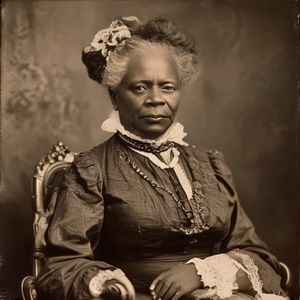
Isabella Baumfree: Enslaved in New York
Sojourner Truth was born Isabella Baumfree around 1797 in Swartekill, Ulster County, New York — enslaved by a Dutch family and raised speaking Dutch as her first language. New York didn't abolish slavery until 1827, and her early life was marked by the full violence of the institution: separation from family, sale to multiple owners, physical abuse, and forced marriage. She bore five children, all of whom belonged to her enslaver.
When New York's gradual emancipation law came into effect in 1827, her enslaver broke his promise to free her early. She walked away, taking her infant daughter Sophia, and found refuge with a Quaker family. When she learned that her son Peter had been illegally sold to a slaveholder in Alabama after New York had freed him, she sued — and won, becoming one of the first Black women to win a court case against a white man in the United States.
"Sojourner Truth" — Naming Herself
In 1843, she reported a divine calling and renamed herself Sojourner Truth — "sojourner" because she would travel, "truth" because she would speak it. She spent the next decades traveling across the North as an itinerant preacher and abolitionist speaker, drawing crowds wherever she went through the sheer force of her oratory despite being unable to read or write.
"Ain't I a Woman? I have ploughed and planted, and gathered into barns, and no man could head me! And ain't I a woman?"
Her 1851 speech — commonly known as "Ain't I a Woman?" — challenged the prevailing framing of women's rights that centered white women's fragility, insisting that Black women's labor and endurance proved the argument for rights more powerfully than any other evidence. It was an argument about intersectionality before that word existed.
Recruiting Soldiers, Desegregating Streetcars
During the Civil War, Truth recruited Black troops for the Union Army in Michigan and met with President Lincoln at the White House in 1864. After the war, she worked with the Freedmen's Bureau in Washington, D.C., helping formerly enslaved people find employment and housing. She advocated for land grants to formerly enslaved people — an early form of reparations argument — though Congress never acted on her petitions.
In Washington, she deliberately tested the desegregation of the capital's streetcar system, forcing conductors to allow her to ride. She was attacked and injured by a conductor who tried to throw her off; she had him arrested. She was 67 years old at the time.