The causal chain of
Black history, mapped.

Every present-day disparity has a cause. Every cause has a chain. Start with a question.

Why is the wealth gap so wide? The FBI sent MLK a letter telling him to kill himself. Who authorized it? Who was the wealthiest person in history — and why haven't you heard of him? What destroyed the wealthiest Black community in America? The GI Bill built the white middle class. How? Before the slave trade, Timbuktu had three universities. What happened? How did people end up in other countries all over the world? Slavery didn't end in 1865. It was legally extended for 80 more years. How? The U.S. created a bank for freed slaves — then let white executives loot it. What happened to the 61,000 depositors? A city larger than many in medieval Europe stood in southern Africa for 300 years. Why have you never heard of it? The sentencing gap between crack and powder cocaine was 100:1. Who designed that — and why? Black Americans owned 15 million acres of farmland in 1910. What happened to it? Socrates studied in Africa. So did Plato. Why does history call their ideas "Greek"? Dahomey had an all-female military unit that defeated European armies. Why wasn't this in your history class? The concept of "race" was invented by one man in 1775. Who was he — and why does it still shape everything? Fred Hampton was 21 years old when the FBI helped kill him in his sleep. What did he do to deserve a government assassination? The men who murdered Emmett Till were acquitted — then gave a magazine interview confessing to everything. What happened to them? A 14-year-old boy was tried, convicted, and executed in one afternoon in 1944. Who was George Stinney? Haiti won its freedom — then France sent a bill. What did that debt cost Haiti over the next 122 years? A Black family built the most popular beach resort in California. The city took it back. How? 40,000 freed people moved to Kansas in a single year to build their own towns. What stopped them? The U.S. Navy existed for 168 years before it commissioned a single Black officer. What changed in 1944?
Read this thread

Scholar-reviewed · Non-profit · No ads

Where it begins

Before the chain was broken

The Transatlantic Slave Trade did not happen in a vacuum. It happened to a world — one of kingdoms and universities, ocean trade and written law, medicine and mathematics. Understanding what was destroyed is inseparable from understanding what followed.

Explore African history threads

c. 300–1200 CE

West Africa

Ghana Empire

The first of the great Sahelian empires controlled the trans-Saharan gold-salt trade, accumulated enormous wealth, and developed sophisticated systems of taxation, governance, and commerce that influenced the entire western Sudan for centuries.

Capital Koumbi Saleh
Known for Trans-Saharan trade, gold, governance
Explore this civilization

c. 1235–1600 CE

West Africa

Mali Empire

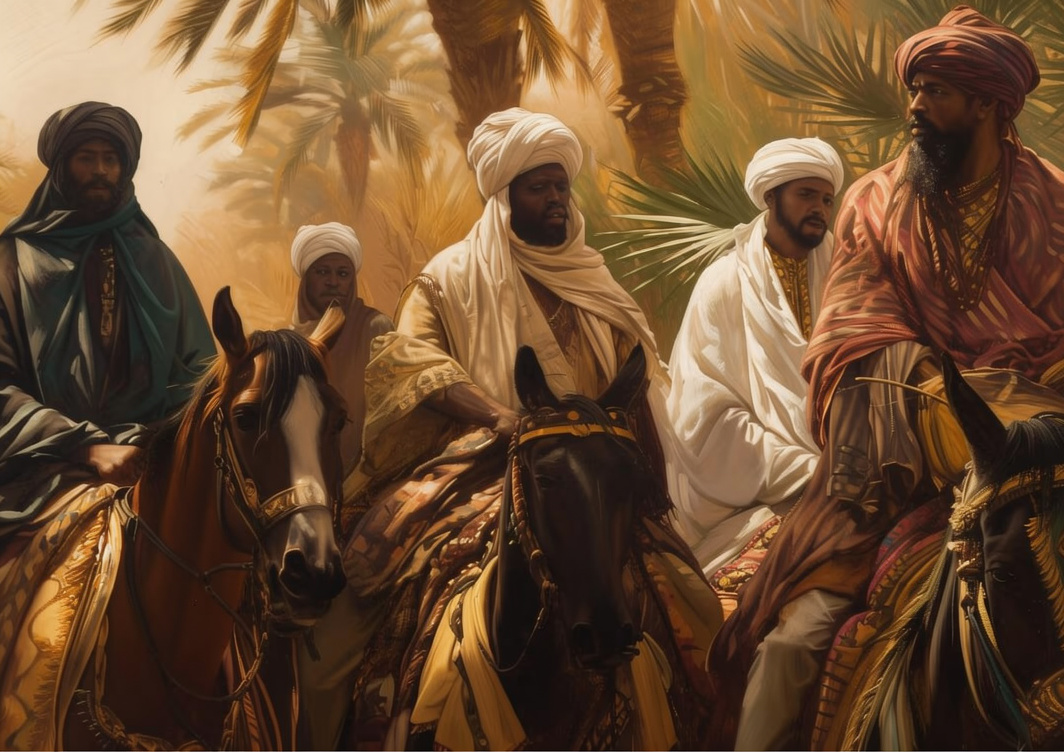
Under Mansa Musa — the wealthiest person in recorded history — the Mali Empire commanded a territory larger than Western Europe. Timbuktu held three universities and a quarter-million manuscripts. Arabic scholars wrote of Mali's justice, abundance, and civic order.

Capital Niani
Known for Timbuktu, scholarship, Mansa Musa's hajj
Explore this civilization

c. 1464–1591 CE

West Africa

Songhai Empire

The largest empire in African history at its peak, stretching from the Atlantic coast to what is now Nigeria. Timbuktu under the Songhai held the Sankore University — a center of Islamic scholarship drawing students and scholars from across the known world.

Capital Gao
Known for Sankore University, Askia Mohammed's legal reforms
Explore this civilization

c. 1100 BCE–350 CE

Northeast Africa

Kingdom of Kush (Nubia)

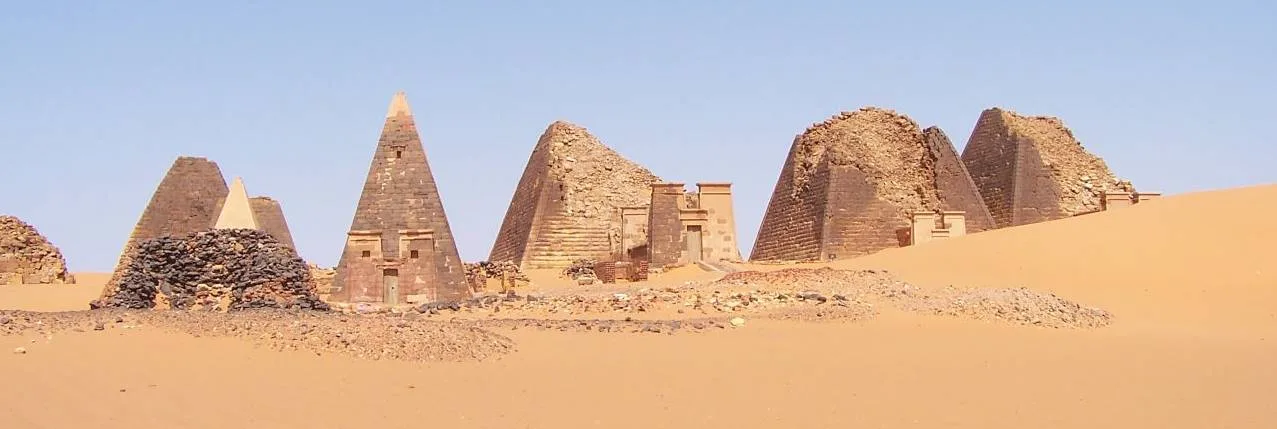
Predating and at times ruling Egypt, the Kushite Kingdom developed its own writing system (Meroitic script), pyramids, and iron technology. The 25th Dynasty of Egypt — the "Black Pharaohs" of Nubia — ruled for nearly a century at the height of Egyptian power.

Capital Meroe (modern Sudan)
Known for Meroitic script, iron, 25th Dynasty rule of Egypt
Explore this civilization

c. 100–940 CE

East Africa

Aksumite Empire

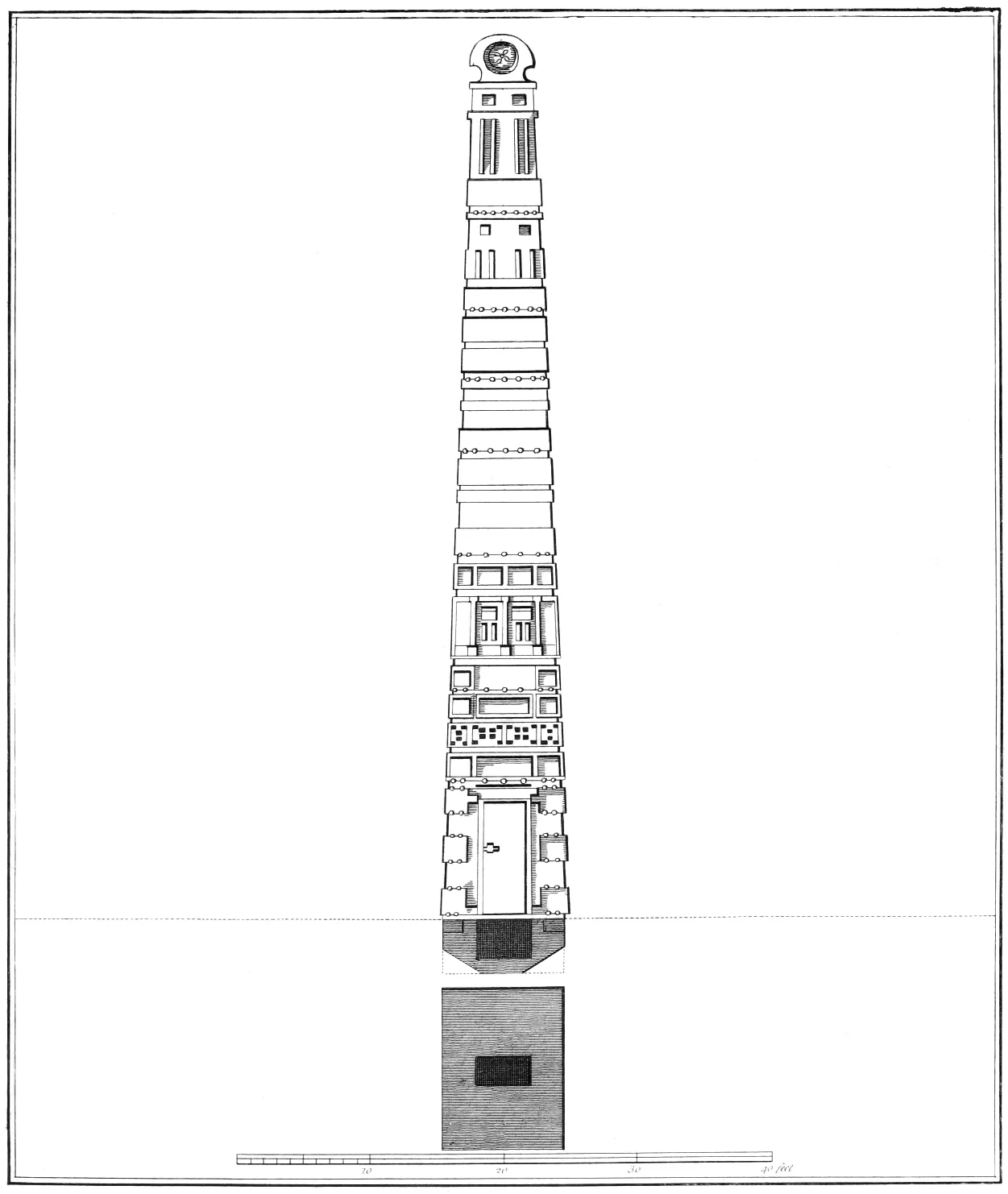
One of the four great powers of the ancient world alongside Rome, Persia, and China. Aksum controlled Indian Ocean and Red Sea trade routes, developed a written script (Ge'ez), minted its own currency, and was among the first states to officially adopt Christianity in the 4th century CE.

Capital Aksum (modern Ethiopia)
Known for Obelisks, Ge'ez script, Indian Ocean trade
Explore this civilization

c. 1300–1897 CE

West Africa

Benin Kingdom

The Benin Kingdom produced some of the most sophisticated bronze and ivory art of the medieval world — the famous Benin Bronzes that stunned European explorers in the 15th century. A complex monarchy with guilds, a standing army, and elaborate diplomacy, it resisted European encroachment for centuries before British colonial forces looted and burned it in 1897.

Capital Benin City (modern Nigeria)
Known for Benin Bronzes, guild system, Oba monarchy
Explore this civilization

711–1492 CE

North Africa / Iberia

The Moors (Al-Andalus)

For 781 years, Muslim Africans and Arabs governed the most advanced civilization in medieval Europe. Córdoba — with 500,000 people, 70 libraries, and paved lit streets — exceeded all of northern Europe while London had 15,000 people and no sewers. Moorish scholars preserved Greek philosophy, invented algebra, and pioneered surgery. Then the Reconquista burned a million books and invented the first racial purity laws in European history.

Capital Córdoba, then Granada
Known for Algebra, medicine, convivencia, the Alhambra
Explore this civilization

What the slave trade interrupted

These were not primitive societies waiting to be "discovered." They were states with currencies, legal codes, diplomatic relations, universities, and centuries of accumulated wealth and knowledge. The Transatlantic Slave Trade — which forcibly removed an estimated 12.5 million people from Africa between 1441 and 1867 — did not merely enslave individuals. It depopulated entire regions, disrupted trade networks, destabilized kingdoms, and set the conditions for 19th-century European colonization.

Understanding this is not a matter of historical pride. It is a prerequisite for understanding the chain. Enslavement was not the starting condition of Black life — it was an interruption of it.

12.5M People forcibly removed from Africa by the Transatlantic Slave Trade (1441–1867)
~2M Who died during the Middle Passage — the sea crossing — before ever reaching the Americas
400 yrs Duration of the Transatlantic Slave Trade — longer than the United States has existed

"African history is not a collection of origins for the history of others. It is the history of African people — in all their complexity, achievement, contradiction, and agency — before, during, and after the disruptions imposed by external forces."

— Cheikh Anta Diop, African historian and scholar, The African Origin of Civilization (1974)

The Chain

Follow it from the beginning

Each step connects to the next. From sovereign African civilizations to this morning's headlines — the chain is unbroken. Click any step to expand.

300 BCE–1600 CE — Origin

Sovereign African Civilizations

Before the slave trade, Africa was home to sophisticated empires: Kush with its iron technology and pyramids; the Mali Empire with its universities at Timbuktu; the Songhai, the largest empire in African history; the Aksumite trade state; the Benin Kingdom with its extraordinary bronze art. These were not primitive societies — they were worlds. That is what was taken.

Now — where does your question lead?

Every thread on Chain begins with a question people actually ask. Pick one and follow it.

The Archive

People. Policy. Place.

View all entries →

Then → Now

Policy has a long tail

These aren't historical events that ended in the past. They are chains that run unbroken to today's news cycle.

Redlining → School Funding → Health Outcomes

Then 1935–1968

Federal maps drew a color line around American cities

239

U.S. cities where HOLC "residential security maps" graded neighborhoods — with Black and immigrant areas rated D (red), making federally backed mortgages impossible to obtain.

Source: Digital Scholarship Lab, University of Richmond, "Mapping Inequality" (2018). HOLC archive records, National Archives.

Now 2024

Formerly redlined neighborhoods still show measurably worse outcomes

$1,800

Less per student annually in majority-Black school districts vs. majority-white districts — a direct result of property-tax school funding in neighborhoods whose values were suppressed by federal policy.

Source: EdBuild, "Dismissed" (2019). Urban Institute, "Long-Term Effects of the Discriminatory Geography of Homeownership" (2023).

Follow this thread → See it on the map →

Reconstruction → Disenfranchisement → Voter Suppression

Then 1865–1877

Black men voted and governed at rates never again seen until the 1960s

16

Black men served in the U.S. Congress during Reconstruction. More than 600 served in state legislatures. The infrastructure of Black political power was built — then systematically demolished after 1877.

Source: Eric Foner, Reconstruction: America's Unfinished Revolution (1988). U.S. House of Representatives Historical Office.

Now 2013–Present

After Shelby County v. Holder, 29 states passed new voting restrictions

29

States enacted new voter ID laws, polling place closures, and registration restrictions within years of the Supreme Court gutting the Voting Rights Act's preclearance requirement — disproportionately affecting Black voters.

Source: Brennan Center for Justice, "Voting Laws Roundup" (2021). Protect Democracy, "Shelby County v. Holder Impact Analysis" (2023).

Follow this thread → Read: Voting Rights Act →

How You Want to Explore

Chain is built for how you think

Whether you're curious, studying, teaching, or reporting — you'll find a way in that fits how you work.

The Evidence Base

Essential sources

Every thread on Chain is built on documented evidence. Here are some of the foundational works this platform draws from.

View full sources archive →
📚 Book

The Color of Law: A Forgotten History of How Our Government Segregated America

Richard Rothstein, 2017

Redlining Housing
📚 Book

Reconstruction: America's Unfinished Revolution, 1863–1877

Eric Foner, 1988

Reconstruction Voting Rights
📊 Dataset

Mapping Inequality: Redlining in New Deal America

University of Richmond DSL, 2018

Redlining Maps
📚 Book

The New Jim Crow: Mass Incarceration in the Age of Colorblindness

Michelle Alexander, 2010

Incarceration Drug War
📄 Research

Long-Term Effects of Discriminatory Homeownership Policy

Urban Institute, 2023

Housing Health
📚 Book

Caste: The Origins of Our Discontents

Isabel Wilkerson, 2020

Structural Racism Systems