Origins: From D'mt to Aksum — A Civilization Builds on the Red Sea
Before Aksum there was D'mt — a sophisticated kingdom in the Tigray highlands dating to at least the 10th century BCE. D'mt built stone temples, used iron tools, and practiced irrigation agriculture. It traded with South Arabia and developed a writing system using the Ge'ez script, which survives to this day as the liturgical language of the Ethiopian Orthodox Church.
By the 1st century BCE, D'mt had given way to a cluster of competing city-states. One of these — centered on the city of Aksum in modern northern Ethiopia — began consolidating power. Its location was strategic genius: the Aksumite highlands controlled the highland passes connecting the African interior to the Red Sea coast, through which ivory, gold, incense, and enslaved people flowed toward the Roman and Persian empires.
The city of Aksum itself was a planned urban center with paved streets, multi-story buildings, and monumental architecture. Its ruling class was literate, cosmopolitan, and commercially sophisticated — aware of Greek and Roman culture, fluent in trade languages, and politically capable of negotiating with the most powerful empires on earth.
The Red Sea Empire: Controlling the World's Most Important Trade Route
The Red Sea in the 1st century CE was the most commercially active waterway on earth. Roman ships carried wine, glass, and silver eastward. Indian and Arabian ships returned with silk, spices, cotton, and pepper. Aksumite merchants sat in the middle — controlling the port of Adulis on the Eritrean coast, the primary transit hub for goods moving between the Mediterranean and the Indian Ocean.
Aksum did not merely facilitate this trade — it taxed it, regulated it, and profited enormously from it. The kingdom's primary exports were ivory (from elephant herds in the lowlands), gold (from the mines of western Ethiopia), obsidian, and live animals for Roman arenas. The income funded an urbanization program unmatched in sub-Saharan Africa at the time.
"The Aksumites grew rich on the Red Sea trade to a degree that allowed their kings to present themselves as the equals of Roman emperors — because in commercial terms, they were."
— Stuart Munro-Hay, Aksum: An African Civilisation of Late Antiquity, 1991The Periplus of the Erythraean Sea, a 1st-century Greek merchant's handbook, describes Adulis in detail — a bustling port where merchants from Rome, Arabia, India, and the African interior traded freely under Aksumite authority. The text describes the Aksumite king as a man of great learning who reads and writes Greek. This is not a marginal African chieftain. This is a literate monarch engaged in international diplomacy.
King Ezana and the Obelisks: Monumental Architecture as Political Statement
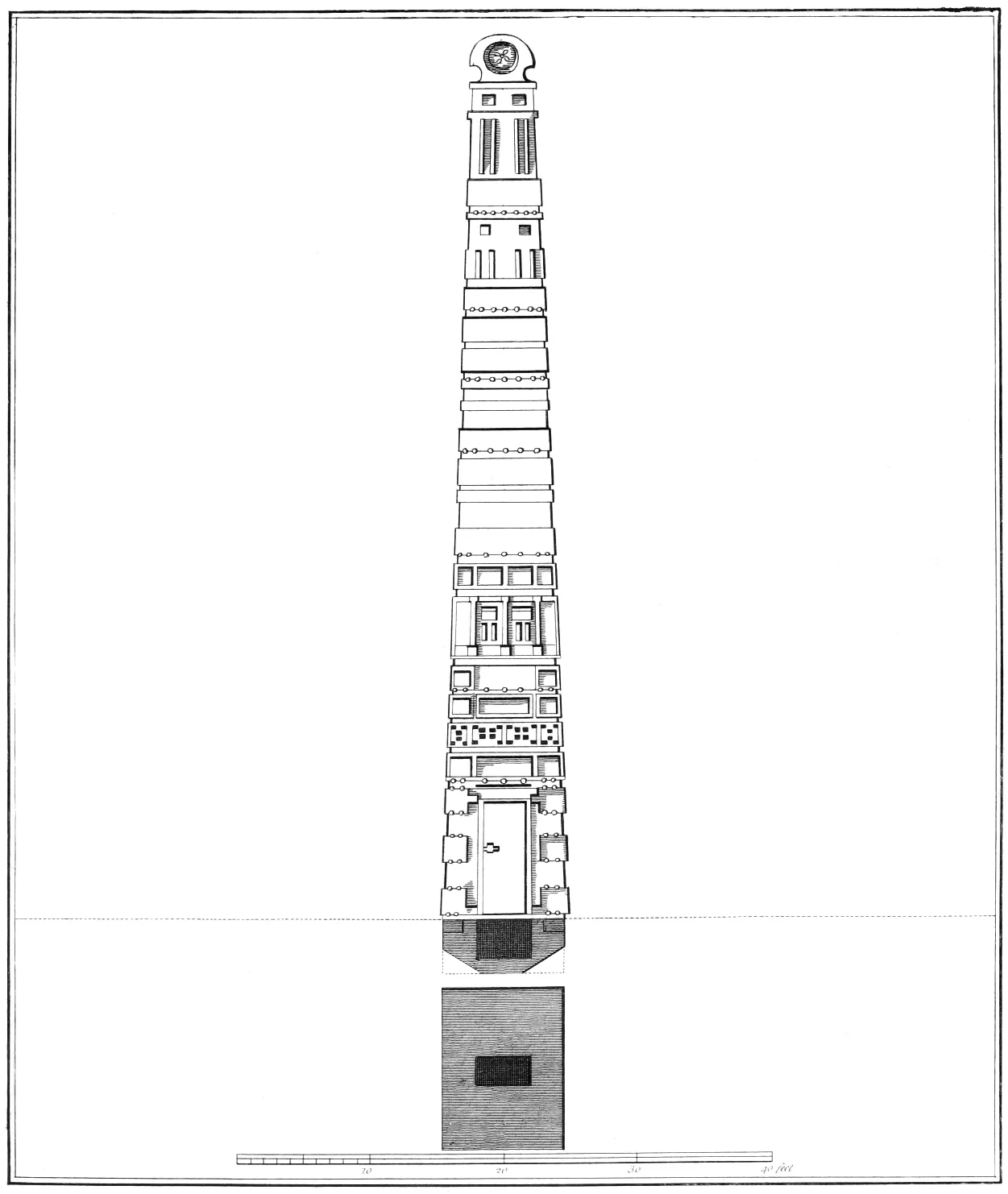
The Aksumite kings built stelae — massive carved obelisks of solid granite — as royal funerary monuments. These were not rough-hewn megaliths. They were precision-engineered towers carved to resemble multi-story buildings, complete with false windows and doors, rising as high as 33 meters — taller than a ten-story building. The largest stele ever attempted, at an estimated 520 tons, fell during construction. It remains the largest single monolith ever quarried in human history.
How the Aksumites moved, shaped, and erected these monuments using the technology of late antiquity remains a subject of active archaeological study. The engineering skill required is comparable to the construction of Roman triumphal arches — and in scale, exceeds most of them.
King Ezana — who ruled in the early 4th century CE — is the most documented Aksumite monarch. His trilingual inscriptions (in Ge'ez, Sabaean, and Greek) record military campaigns across the Horn of Africa and into the Arabian Peninsula, the conquest of the Kingdom of Kush at Meroë (ending that civilization), and — most significantly — his conversion to Christianity around 330 CE.
First Christian Nation: Aksum Adopts Christianity Before Rome Makes It Official
In approximately 330 CE, King Ezana converted to Christianity and declared it the official religion of the Aksumite state. This makes Aksum — not Rome, not Byzantium — the first nation in history to adopt Christianity as its state religion. The Roman Emperor Constantine issued the Edict of Milan tolerating Christianity in 313 CE; it was not declared the official state religion of Rome until 380 CE under Theodosius I. Aksum got there first.
The conversion came through Frumentius, a Syrian Christian shipwrecked on the Eritrean coast as a child, who was raised in the Aksumite court, became an advisor to King Ezana, and eventually traveled to Alexandria to be consecrated as the first Bishop of Aksum by Patriarch Athanasius. The Ethiopian Orthodox Church traces its apostolic succession through this line to the present day — making it one of the oldest continuously functioning Christian institutions on earth.
"The Christian kingdom of Aksum was not a peripheral outpost of Mediterranean Christianity. It was an independent theological tradition that shaped Christian practice across East Africa and the Arabian Peninsula for centuries."
— David Phillipson, Ancient Ethiopia, 1998Aksumite Christianity also maintained the Ark of the Covenant — the biblical chest housing the tablets of Moses — according to Ethiopian tradition. The claim is documented in the Kebra Nagast, a 13th-century compilation of much older oral and written traditions, which holds that the Ark was brought to Ethiopia by Menelik I, the son of King Solomon and the Queen of Sheba. Whether historical or legendary, the tradition has structured Ethiopian national and religious identity for more than a thousand years.
Peak Power: Coinage, Conquest, and Correspondence With Rome
Aksum is one of only a handful of ancient states to have minted its own coinage — joining Rome, Persia, the Kushan Empire, and China. Aksumite gold, silver, and bronze coins circulated from the 3rd through 7th centuries CE, bearing the images of kings with inscriptions in Ge'ez and Greek. The coins are evidence of a sophisticated monetary economy integrated into international commerce — not a barter-based chieftaincy, but a state capable of fiscal policy.
In the 4th century CE, the Persian writer Mani listed Aksum as one of the four greatest kingdoms on earth, alongside Rome, Persia, and China. Roman Emperor Constantius II wrote directly to King Ezana as a political equal, requesting diplomatic cooperation. These were peer relationships between major powers — not patron-client relationships between a civilization and its African dependency.
In 525 CE, the Aksumite King Kaleb launched a naval invasion of Yemen in response to the persecution of Christians by the Jewish Himyarite king Yusuf Asar. The Aksumite army crossed the Red Sea, defeated the Himyarites, and installed a Christian governor in Sana'a. This was a projection of military and religious power across an ocean — a capability that most histories reserve exclusively for European powers of a much later era.
Decline and Legacy: The Islamic Expansion and the Long Retreat
The rise of Islam in the 7th century CE fundamentally restructured the world Aksum had dominated. Arab Muslim forces swept across North Africa and the Arabian Peninsula, seizing the Red Sea ports that were the economic foundation of Aksumite power. The kingdom's trade revenues collapsed. Adulis was abandoned. The coinage stopped. The kingdom retreated into its highland core.
The decline was not sudden — it stretched across two centuries. Aksum's population contracted, its urban centers shrank, and its political authority fragmented. By the 10th century CE, the kingdom had effectively ended, though a successor state — the Zagwe Dynasty — continued Christian rule in the highlands and built the famous rock-hewn churches of Lalibela, one of the great architectural achievements of the medieval world.
"Aksum did not fall to conquest. It was strangled economically. When the Arab expansion closed the Red Sea to Aksumite commerce, the kingdom lost the revenue that made its monumentalism possible. What looks like decline was actually isolation."
— Taddesse Tamrat, Church and State in Ethiopia, 1972The legacy of Aksum is not lost — it lives in the Ethiopian Orthodox Church, in the Ge'ez language, in the stelae that still stand in the city of Aksum (one was stolen by Mussolini's Italy in 1937 and returned in 2008), and in the unbroken national tradition that connects modern Ethiopia to one of the ancient world's great powers. Ethiopia is the only African country never colonized by a European power — a fact rooted in the military and institutional continuity that Aksum made possible.