60
Original articles (1685)
98
Articles in 1724 Louisiana version
800K+
Enslaved in Saint-Domingue by 1789
The Code Noir was issued by Louis XIV's finance minister Jean-Baptiste Colbert as a regulatory document for France's expanding Caribbean colonies. It defined, in exhaustive legal detail, the conditions under which African people could be enslaved, bought, sold, and destroyed.
Selected Articles of the Code Noir (1685)
Art. 2
All slaves in our islands shall be baptized and instructed in the Roman Catholic Apostolic Faith. [Baptism did not confer freedom — it was a mechanism of psychological control.]
Art. 28
We declare that slaves can have no right to any kind of property; and that all that they acquire by their industry, or by the liberality of others, or otherwise, shall be the full property of their masters.
Art. 38
A fugitive slave who has been on the run for one month shall have his ears cut off and be branded on one shoulder. For a second offense, the hamstring shall be cut and he shall be branded on the other shoulder. A third offense is punishable by death.
Art. 43
We enjoin our officers to prosecute those who shall have killed their slaves or mutilated their limbs only when there are special circumstances; otherwise we declare such proceedings irregular and insufficient.
Article 43 is worth sitting with: killing an enslaved person was not automatically prosecutable. The state reserved the right not to pursue charges if there were no "special circumstances." Enslaved people had no legal standing to protect themselves, no ability to testify in court, no right to own property, no right to marry without their enslaver's permission, and no right to their own children.
When France established Louisiana as a colony, it issued a revised Code Noir with 98 articles — expanding the original and adding new prohibitions. The Louisiana version added explicit racial categorization, forbidding free Black people from associating with enslaved people, mandating segregated seating at public assemblies, and outlawing interracial marriage.
These additions to the Louisiana code were directly imported into American law when the United States acquired Louisiana in 1803. Legal scholars trace the origin of Louisiana's Black Codes — which persisted into the 20th century — directly to the 1724 Code Noir. Jim Crow was not invented in 1877. Its legal infrastructure was inherited from France, via Louisiana, two centuries earlier.
"The Code Noir is the founding document of American racial law. We just don't call it that."
— Kimberlé Crenshaw, legal scholar, Columbia Law School
40%
World's sugar supply from Saint-Domingue (1789)
500K
Enslaved people on the island by 1791
30K
White colonists who held them
By 1789, Saint-Domingue — a single Caribbean island — produced 40% of Europe's sugar and 60% of its coffee. It was the most profitable colony on Earth. It was also the most brutal laboratory of Code Noir enforcement. Enslaved people were worked to death at such rates that the colony required 30,000–40,000 new enslaved Africans per year simply to maintain the labor force.
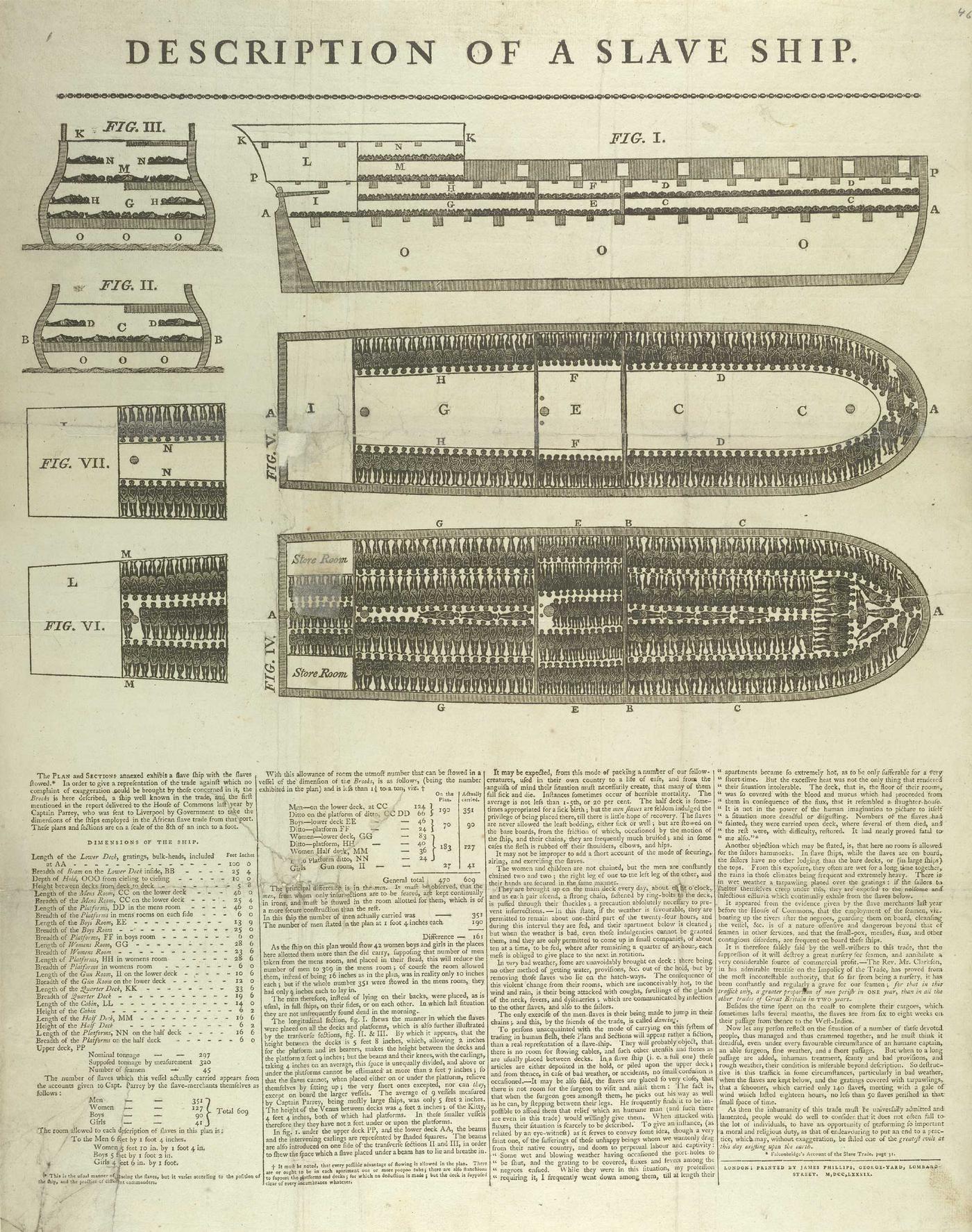
The specific tortures mandated or tolerated by the Code Noir — branding, dismemberment, the four-post (burying a person up to the neck near an anthill), the breaking wheel — were used regularly on the island. Plantation managers kept detailed records.
The Haitian Revolution of 1791–1804 was the enslaved population's direct response to this system. It was the only successful slave revolt in history that resulted in the founding of a nation. France charged Haiti $21 billion (in today's dollars) for the loss of its "property" — the enslaved people who had freed themselves. Haiti paid until 1947.
When the United States purchased Louisiana in 1803, it inherited the legal infrastructure that France had built. American legislators used the Code Noir's framework — not as a foreign imposition, but as a useful template — when drafting Black Codes after the Civil War, vagrancy laws during Reconstruction, and segregation statutes through the 20th century.
The Code Noir's core innovation — the idea that a category of person can be defined by race and then permanently excluded from legal personhood — did not die with abolition. It was translated into new legal forms: convict leasing, the Black Codes, separate but equal, and eventually mass incarceration. The legal DNA persists.
No American history curriculum teaches the Code Noir as an American document. But it is. Louisiana law today still bears traces of Napoleonic and Code Noir influence in areas from inheritance to criminal procedure — traces that legal historians argue created the conditions for Louisiana's outsized Black incarceration rate, the highest in the United States and one of the highest in the world.