~500K
Black workers in auto industry by 1970
1941
FDR's Executive Order 8802 banning war industry discrimination
Black workers were largely excluded from Northern manufacturing through the 1930s — many unions actively barred Black membership; companies claimed Black workers were unsuitable for skilled work. World War II changed this, not through goodwill but through necessity: labor shortages and President Roosevelt's Executive Order 8802 (which banned discrimination in war industries, under threat from A. Philip Randolph's planned March on Washington) forced integration of factory floors.
In the postwar years, Black men found in manufacturing what earlier generations had found in sharecropping — hard work, but this time with wages. Wages that bought houses, funded children's educations, and began the slow accumulation of savings. Detroit's autoworkers, Chicago's steelworkers, Baltimore's Bethlehem Steel workers built the Black middle class. Union wages were union wages regardless of race — the best equalizing force that Black workers had encountered in American economic life. This window lasted approximately twenty-five years. Then the plants left.
Between 1967 and 1987, Philadelphia lost 64% of its manufacturing jobs. Chicago lost 60%. Detroit lost 51%. These were not gradual declines — they were industry collapses concentrated in a fifteen-year period, driven by a combination of automation, foreign competition (particularly from rebuilt Japanese and German industries), corporate decisions to relocate to lower-wage Sun Belt states or overseas, and the deliberate suburbanization of manufacturing plants that followed white residential flight (and federal highway subsidies that made suburban plant locations viable).
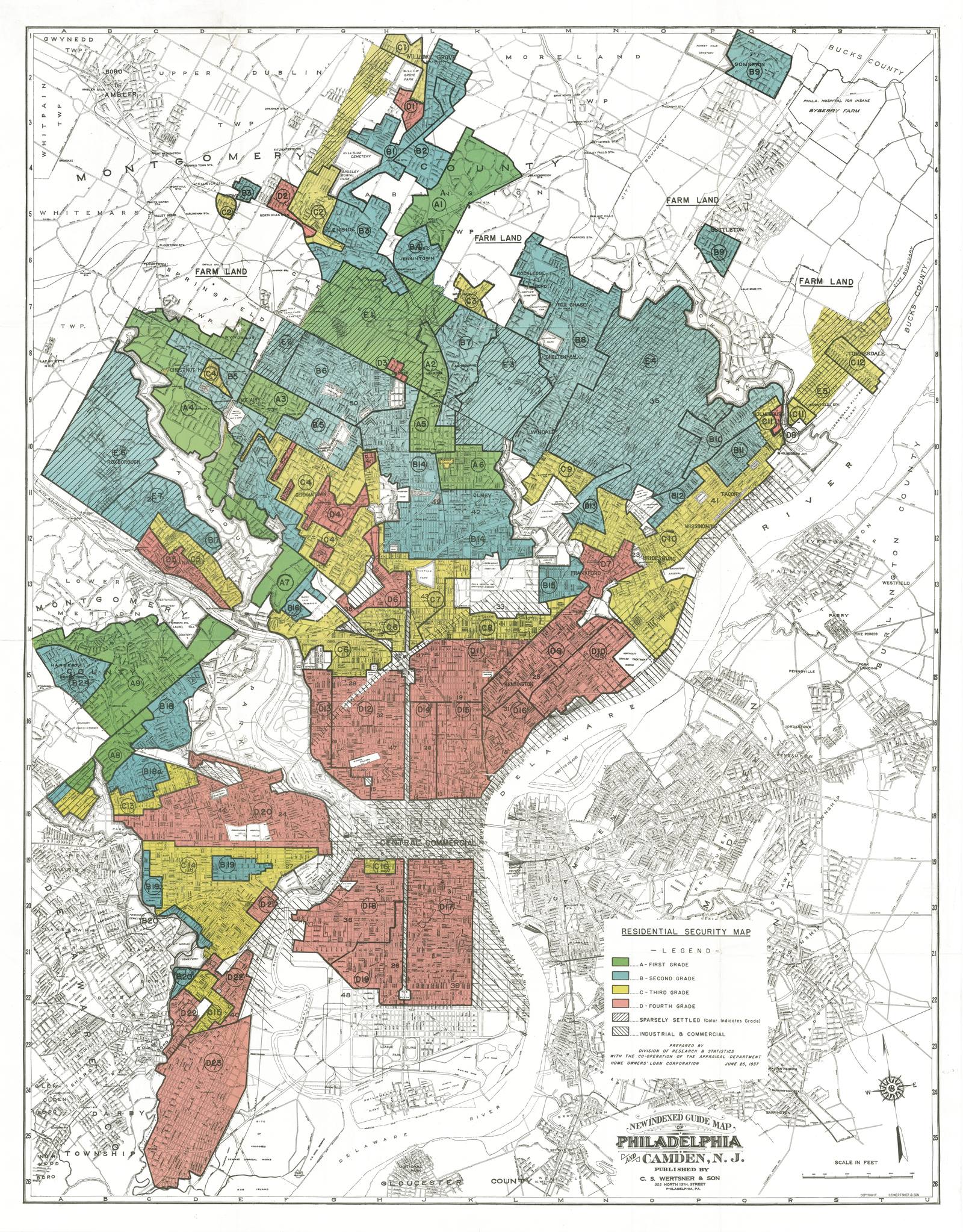
Black workers bore the disproportionate impact through seniority systems: "last hired, first fired" meant that Black workers who had only entered the union hall in the 1950s and 1960s had the least protection when layoffs came. The skilled trades — machining, electrical work, tool and die — had been the hardest to integrate and remained predominantly white; when plants closed, white workers had more transferable skills. And the neighborhoods where Black workers lived — already deprived of investment by redlining — collapsed when the tax base collapsed with the plants.
"My father worked at Bethlehem Steel for thirty-one years. He owned his house. My brothers and I went to college. The plant closed in 1983. My block looks like it was bombed."
— Baltimore resident, interviewed 2005
25%
Black male unemployment in some cities, mid-1980s
1971
Nixon declares War on Drugs — same year deindustrialization peaks
The crack cocaine epidemic of the 1980s is typically discussed as a cultural or moral failure of Black urban communities. It was, in significant part, an economic response to deindustrialization. When manufacturing jobs disappeared and were replaced by nothing — service sector work paid less and offered no union protections; the informal drug economy offered income — the informal economy filled the gap. The War on Drugs then treated this economic survival strategy as a criminal justice problem, concentrating mass incarceration in the same communities that deindustrialization had just economically devastated.
Deindustrialization, the War on Drugs, and mass incarceration are one continuous story. Capital left the cities. The vacuum was filled by the informal economy. The state criminalized the informal economy. The resulting incarceration rates destroyed families, disabled voting rights, and made legal employment even harder to obtain. The poverty that manufacturing wages had briefly interrupted was re-established — this time with a criminal record attached to it.