In 1978, the state of North Carolina selected Warren County — a majority-Black, rural county with no political power and no legal resources — as the site for a PCB (polychlorinated biphenyl) landfill containing 30,000 tons of contaminated soil. PCBs are classified as probable carcinogens and cause liver damage, immune system disruption, and endocrine disorders. Residents objected. The state proceeded.
In 1982, when the state began depositing the contaminated soil, residents and civil rights activists staged six weeks of protests, lying down in front of dump trucks. More than 500 people were arrested — the first time Americans had been arrested for protesting environmental issues. The protest failed to stop the landfill, but it produced the organizing framework and the language: civil rights leader Benjamin Chavis coined the term "environmental racism" in his report on the protests and their political context. The United Church of Christ commissioned the first national study in 1987, and the data confirmed what Warren County had demonstrated: this was a pattern, not an isolated decision.
"Racial and ethnic communities bear a disproportionate burden of environmental hazards created by industrial, municipal and federal facilities... Race proved to be the most influential among variables tested in association with the location of commercial hazardous waste facilities."
— United Church of Christ, "Toxic Wastes and Race in the United States," 1987
150+
Petrochemical facilities in 85-mile stretch between Baton Rouge and New Orleans
95×
Higher cancer risk in some Cancer Alley census tracts vs. national average
The stretch of the Mississippi River between Baton Rouge and New Orleans — historically home to former plantation communities of Black descendants — now contains more than 150 petrochemical facilities. The communities that remain are predominantly Black and poor: the petrochemical corridor was built around existing Black communities, not in uninhabited industrial land. St. James Parish, where a proposed Formosa Plastics facility would have been the single largest plastics factory in the world, is 54 percent Black. The EPA's own analysis found that residents in nearby Census tracts faced cancer risks 95 times higher than the national average.
The residents fighting these facilities are not opposing economic development in the abstract — they are fighting for survival. Sharon Lavigne, founder of RISE St. James, won the Goldman Environmental Prize in 2021 for her successful campaign to block the Formosa Plastics plant. But the broader industry complex that was already in place before her organization existed remains. And the regulatory framework — the Clean Air Act, the Clean Water Act, environmental impact assessments — has consistently treated the cumulative burden of multiple facilities in one community as legally distinct from any individual facility's permit, making it nearly impossible to hold regulators accountable for patterns even when the pattern is undeniable.
57%
Flint's population that is Black
5 yrs
Duration of lead exposure before full system replacement
In 2014, state-appointed emergency managers overseeing Flint — a majority-Black city under state financial control — switched the city's water source from Lake Huron to the Flint River to save money. State officials did not apply corrosion control chemicals, which caused lead from aging pipes to leach into the drinking water. State and federal officials were informed of dangerously elevated lead levels in 2015 and denied the problem or minimized it for more than a year while Flint residents continued drinking lead-contaminated water. Children who consumed lead-contaminated water during developmental periods face permanent cognitive impairment.
The Flint water crisis was not a natural disaster or a failure of infrastructure. It was a series of decisions made by officials who knew — or should have known — the consequences, in a community that lacked the political power to compel a different decision. When similar infrastructure problems were identified in white suburban communities, the response was faster and the remediation more complete. The comparison is documented in peer-reviewed public health literature. Flint's water system was not fully repaired until 2019 — five years after the contamination began, three years after it became a national story.
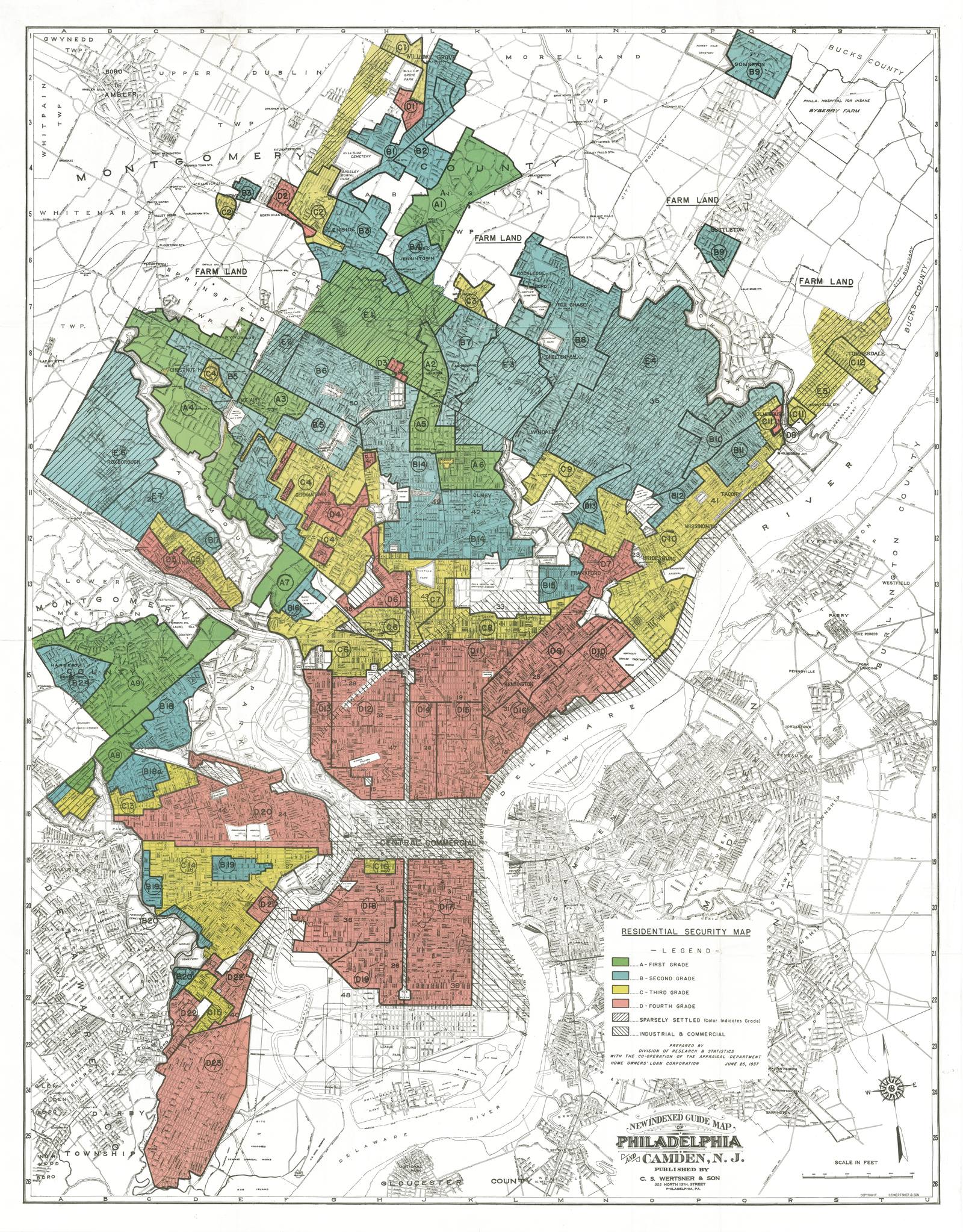
Black Americans are less likely to own cars, more likely to rely on public transit, more likely to live in urban heat islands without air conditioning, more likely to live in flood-prone areas (due to the redlining policies that pushed Black residents into low-lying neighborhoods), and more likely to have pre-existing respiratory conditions from industrial pollution exposure. As climate change intensifies hurricanes, heat waves, flooding, and air quality emergencies, Black communities face the compounded risks of existing environmental burden plus accelerated climate impacts.
The connection to redlining is direct and measurable: a 2020 study published in Climate found that formerly redlined neighborhoods in 108 U.S. cities are on average 2.6 degrees Celsius hotter in summer than non-redlined neighborhoods in the same city, because of the documented correlation between redlining, tree canopy, green space, and impervious surfaces. The federal government's housing discrimination policy from the 1930s is producing differential heat mortality in those same neighborhoods ninety years later.
Environmental racism is not a metaphor for inequality in general. It is a specific, measurable, documented pattern of industrial siting decisions, regulatory failures, and infrastructure disinvestment whose cumulative effect is that Black Americans are more likely to be poisoned by their environment — by their water, air, and soil — than white Americans living at the same income level.