40
Countries with UNIA chapters
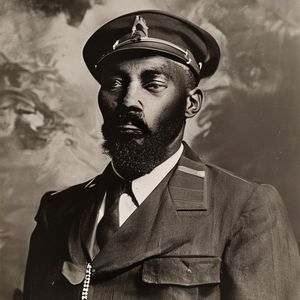
Marcus Garvey founded the Universal Negro Improvement Association in Jamaica in 1914 and brought it to Harlem in 1916, where it grew explosively. The UNIA was not primarily a political organization in the electoral sense — it was an economic and cultural institution. It operated the Negro World newspaper (printed in three languages), the Black Star Line (a Black-owned steamship company designed to link African diaspora communities commercially), the African Communities League, and the Black Cross Nurses.
Garvey's ideology — "Black nationalism" or "Pan-Africanism" — held that Black people could not achieve true freedom within white-dominated societies, and that the path to liberation ran through economic independence, racial pride, and ultimately political control of the African continent. "Up, you mighty race, accomplish what you will," he told his followers. At a moment when Jim Crow was absolute, when lynching was epidemic, and when the NAACP's integrationist strategy had produced formal legal recognition but no material change, the message resonated.
"Look to Africa, when a black king shall be crowned, for the day of deliverance is near."
— Marcus Garvey, 1920
J. Edgar Hoover, then head of the Bureau of Investigation's General Intelligence Division, identified Garvey as "the most dangerous Negro in America" in 1919 — the same phrase he would use about Martin Luther King Jr. forty years later. Hoover assigned agents to infiltrate the UNIA, collect evidence of legal violations, and neutralize the movement. He was explicit: "I consider the matter of great importance... to obtain enough evidence to warrant his deportation."
The Bureau found its charge: mail fraud, related to the Black Star Line's stock sales. Garvey was convicted in 1923, sentenced to five years in federal prison, and deported to Jamaica in 1927 after President Coolidge commuted his sentence. The conviction was almost certainly politically motivated — the government's case relied heavily on a letter that may never have been mailed — but it succeeded in removing Garvey from the United States permanently.
The suppression of Garveyism was the prototype for COINTELPRO: identify a Black leader whose vision of racial advancement is incompatible with American white power structures, surveil them comprehensively, find a legal pretext for prosecution, and remove them from the field. The method was refined over the next fifty years. Its first major application was Marcus Garvey.
Garvey was deported. His ideas were not. Pan-Africanism became the theoretical framework for African independence movements: Kwame Nkrumah, Jomo Kenyatta, and Julius Nyerere all drew directly on Garveyist thought. The Nation of Islam — founded in Detroit in 1930, just three years after Garvey's deportation — adopted his economic nationalism and racial pride framework. The Black Power movement of the 1960s explicitly invoked Garvey. Malcolm X's father was a Garvey organizer; Malcolm grew up hearing Garvey's ideas at the dinner table.
Garvey's lasting contribution to American political thought is this: the insistence that Black people do not need white approval to build institutions, accumulate wealth, or claim dignity. Assimilation into white American society was not the only option. This was a radical claim in 1920. It remains contested in American politics today.