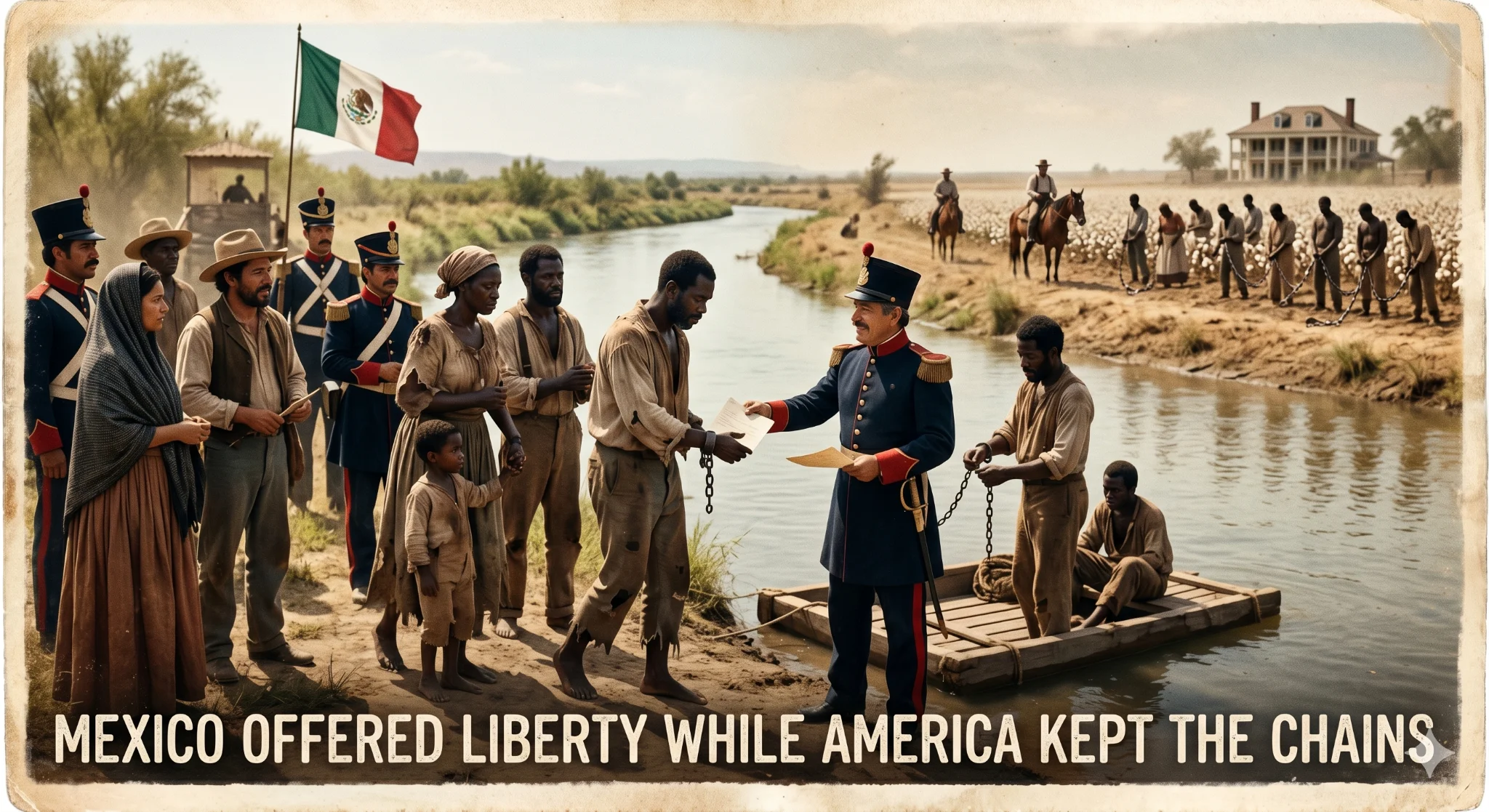
Vicente Guerrero Abolished Slavery. He Was of African Descent. The United States Tried to Buy an Exemption.
On September 15, 1829 — Mexico's Independence Day — President Vicente Guerrero issued a decree abolishing slavery throughout the Republic of Mexico. The timing was symbolic: Guerrero was himself of mixed Indigenous and African descent, a former guerrilla commander who had fought for Mexican independence and was now the country's second president. His abolition decree was the most sweeping antislavery act by any government in the Western Hemisphere to that point.
The reaction from American slaveholders in Texas — who had been encouraged to settle in Mexican territory and had brought enslaved people with them under an uneasy legal tolerance — was immediate alarm. Joel Poinsett, the U.S. Minister to Mexico (after whom the poinsettia plant is named), had already been working to cultivate political relationships in Mexico City. American slaveholders pressured Washington to negotiate an exemption for Texas. The Mexican state of Coahuila y Texas briefly delayed enforcement, but the legal reality was clear: enslaved people who reached Mexican-controlled territory were free.
Guerrero was deposed in a coup in 1830 and executed in 1831 — in part because powerful conservative and landowning interests found him too radical. But his abolition decree stood. Every subsequent Mexican government maintained it. The Rio Grande became a freedom line.
"Taking into consideration that the Independence, the Union, and the good of the Mexican nation imperiously require the abolition of slavery... I decree: Slavery is abolished in the Republic."
— President Vicente Guerrero, September 15, 1829