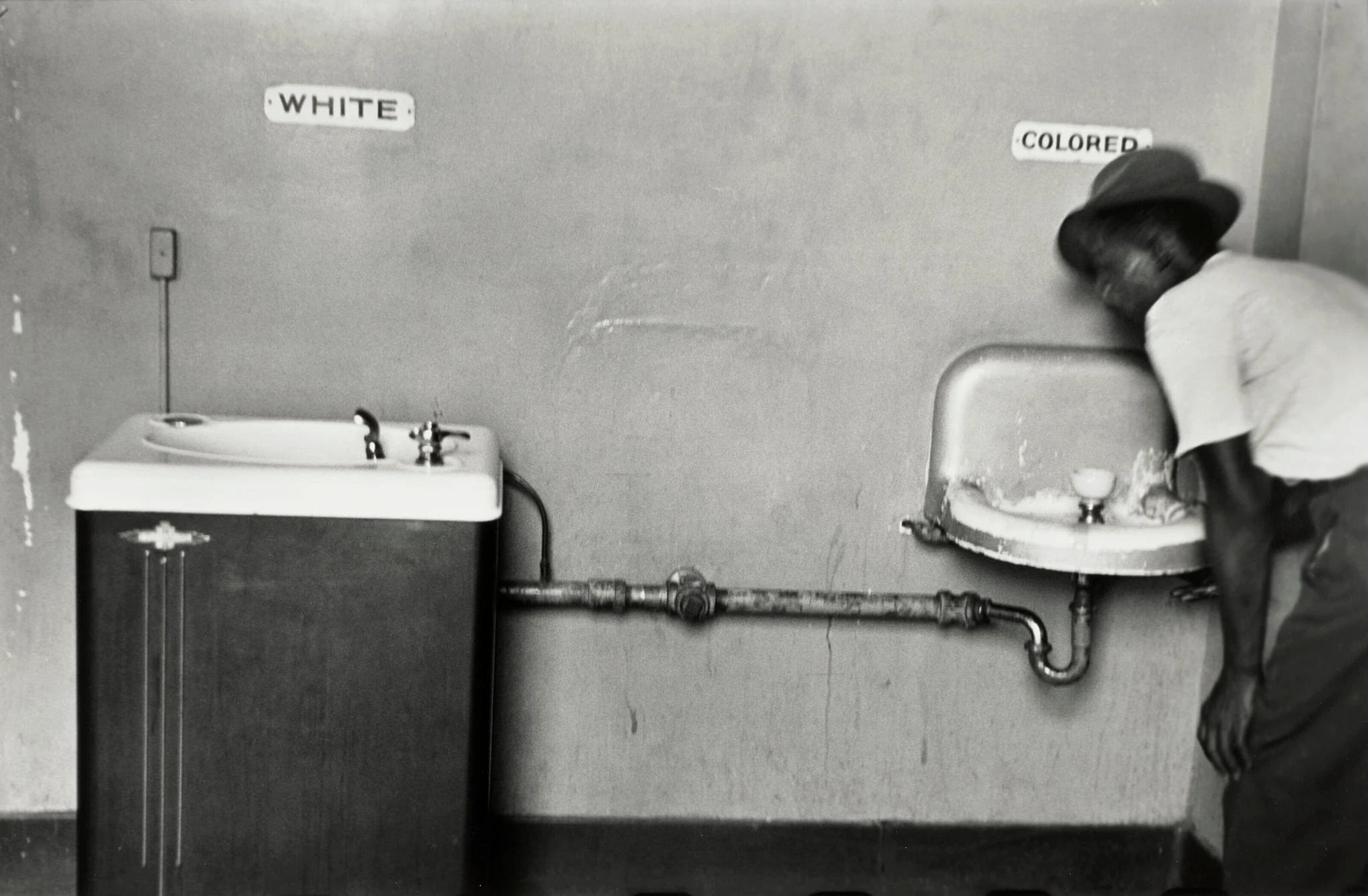
$0
Wage for leased convicts
The Thirteenth Amendment was ratified on December 6, 1865. Mississippi had already passed its Black Codes in November — before the amendment was even official. The message was deliberate: the South would comply with the letter of emancipation while obliterating its meaning.
Mississippi's Black Code required all Black people to have written proof of employment at the start of each year. Any person found without this contract could be arrested for vagrancy. The arrested person could then be hired out to any white employer who paid their fine — the first iteration of convict leasing. Black people could not rent land in cities, own firearms, or testify against white people in court. "Apprenticeship" laws allowed courts to bind Black children to white employers without parental consent, reproducing the specific mechanism of slavery for the next generation.
"Under the guise of apprenticeship, the courts bound out negro children, male and female, especially orphans, to white persons, to serve until they were of age, with the consent of parents, and without, if the 'interests' of the child required it."
— Mississippi Freedmen's Bureau report, 1865
The core mechanism of the Black Codes was the vagrancy law. In every former Confederate state, a "vagrant" was defined as any person without a labor contract — which meant, in practice, any Black person who was between jobs, traveling, or attempting to negotiate their own wages. Vagrancy was a criminal offense. The punishment was a fine. The fine was paid by a white employer. The convicted person then owed that employer labor until the debt was cleared.
This was not an accident or an overreach. It was the explicit intent. The Codes were drafted by former slaveholders to solve a specific economic problem: four million workers had just been freed, and the plantation economy required their labor at near-zero cost. Vagrancy laws solved that problem by making freedom itself illegal for anyone who did not accept white-controlled employment.
South Carolina's Code prohibited Black workers from any occupation other than farming or domestic service without a special license — effectively barring Black people from skilled trades and urban economies. Georgia's Code required that all labor contracts be in writing and witnessed by a white person, making Black workers uniquely vulnerable to wage theft by employers who controlled the documentation.
The Black Codes produced an immediate response from the Republican-controlled Congress. The Civil Rights Act of 1866 declared that all persons born in the United States were citizens — directly overturning the Dred Scott decision — and guaranteed them the same legal rights as white citizens. President Andrew Johnson vetoed it. Congress overrode the veto. It was the first time Congress had overridden a presidential veto on major legislation.
The Fourteenth Amendment, ratified in 1868, embedded these protections in the Constitution itself: equal protection under the law, due process, birthright citizenship. The Black Codes were voided. The Freedmen's Bureau was expanded to enforce Black labor rights. For a brief window — roughly 1866 to 1875 — Black men voted, held office, built schools, and exercised political power in the South for the first time.
But the federal government's commitment to enforcing these protections was always conditional. When enforcement required sustained military presence, sustained federal spending, and sustained political will against determined white Southern resistance — all three gave out within a decade.
830K+
Convicts leased 1870–1928
~30%
Annual death rate in some leasing operations
After the Compromise of 1877 ended Reconstruction and removed federal troops from the South, the Black Codes were effectively reinstated under a different name. The Thirteenth Amendment's exception clause — "except as punishment for a crime" — became the new legal foundation. Southern states passed new vagrancy laws, anti-enticement laws (making it a crime to recruit Black workers away from their current employer), and criminal surety laws (requiring that fines be paid by an employer rather than served as jail time, recreating debt bondage).
Convict leasing became a major revenue source for Southern states and a primary labor supply for railroads, coal mines, turpentine camps, and farms. Mortality rates in some leasing operations exceeded 30 percent annually. The workers received no wages. The legal apparatus that produced them was the Black Codes, restructured to survive the Fourteenth Amendment.
"The Thirteenth Amendment didn't end slavery — it created a loophole. And the South drove a four-hundred-year labor system through that loophole, and kept driving it for another hundred years."
— Douglas Blackmon, Pulitzer Prize-winning author of Slavery by Another Name (2008)
2.1M
Currently incarcerated
38%
Black share of prison population (13% of U.S. pop.)
The structural logic of the Black Codes — criminalize Black activity, extract Black labor — did not require slavery or formal Jim Crow to operate. After the Civil Rights Act of 1964 and Voting Rights Act of 1965, the apparatus was rebuilt again, this time through drug law. Nixon's aide John Ehrlichman later admitted that the War on Drugs was designed to target "the antiwar left and Black people" — to criminalize their communities and "disrupt those people."
Mass incarceration, like the Black Codes, creates a population of people with severely restricted rights: unable to vote in many states, barred from public housing and federal student loans, legally discriminated against in employment. The Thirteenth Amendment's exception clause — unchanged since 1865 — still allows prison labor at wages near zero. Several states still use prison labor for agricultural work.
The Black Codes were not a historical aberration. They were the opening entry in a continuously updated legal document — revised in 1877, again in the 1970s, and still in effect today under different section headings.