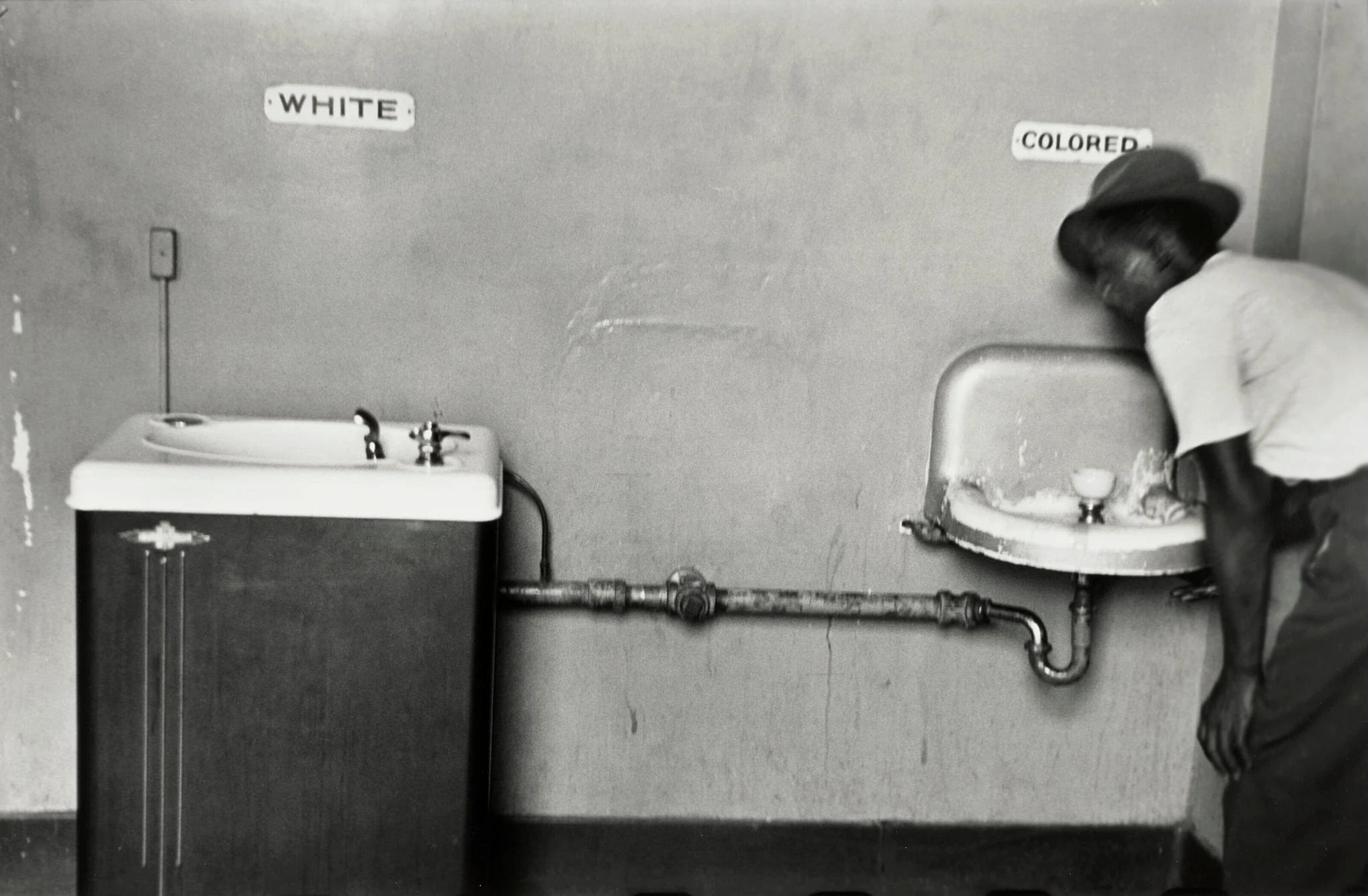
The Plessy case was not an accident. It was engineered. In 1890, Louisiana passed the Separate Car Act, requiring "equal but separate accommodations" for Black and white railroad passengers. The Comité des Citoyens — a New Orleans civil rights organization composed largely of Creole men of color — organized a deliberate legal challenge. They recruited Homer Plessy, a man who was seven-eighths white and one-eighth Black (and appeared white to anyone who looked at him), to buy a first-class ticket and sit in the white car. He was arrested as planned.
The Comité wanted to expose the absurdity of racial classification under the law. If a man who appeared white could be arrested for sitting in the white car, then "separate but equal" was clearly about social control, not any objective racial characteristic. They argued that the Louisiana law violated the Thirteenth and Fourteenth Amendments. The case moved through the courts for six years before reaching the Supreme Court in 1896.
7–1
Vote (one justice not participating)
58 yrs
Before Brown overturned it
Justice Henry Billings Brown, writing for the seven-member majority, held that the Fourteenth Amendment "could not have been intended to abolish distinctions based upon color, or to enforce social, as distinguished from political, equality." Racial segregation, he ruled, was not a mark of inferiority — it was a natural social organization that did not violate any constitutional protection.
The majority's logic was circular: segregation does not stamp Black people as inferior because the law treats them as equal. If Black people feel inferior because of segregation, Brown wrote, "it is not by reason of anything found in the act, but solely because the colored race chooses to put that construction upon it." The inferiority was in the victims' imagination, not the law's intent.
"We consider the underlying fallacy of the plaintiff's argument to consist in the assumption that the enforced separation of the two races stamps the colored race with a badge of inferiority. If this be so, it is not by reason of anything found in the act, but solely because the colored race chooses to put that construction upon it."
— Justice Henry Billings Brown, majority opinion, Plessy v. Ferguson (1896)
Justice John Marshall Harlan was a former slaveholder from Kentucky — the last man one might expect to write the most powerful civil rights dissent in the Court's history. He saw exactly what the majority was doing, and he said so without equivocation.
Harlan called the decision "pernicious" and predicted accurately what it would produce: "What can more certainly arouse race hate, what more certainly create and perpetuate a feeling of distrust between these races, than state enactments, which, in fact, proceed on the ground that colored citizens are so inferior and degraded that they cannot be allowed to sit in public coaches occupied by white citizens?" He stated plainly that the Louisiana law had no purpose other than "to exclude colored people from coaches occupied by or assigned to white persons."
"Our Constitution is color-blind, and neither knows nor tolerates classes among citizens. In respect of civil rights, all citizens are equal before the law... In my opinion, the judgment this day rendered will, in time, prove to be quite as pernicious as the decision made by this tribunal in the Dred Scott case."
— Justice John Marshall Harlan, dissenting, Plessy v. Ferguson (1896)
Plessy gave legal sanction to a total system of racial separation: schools, hospitals, libraries, parks, swimming pools, courtrooms, prisons, drinking fountains, restaurant entrances, blood banks. No one pretended the facilities were equal. Municipal pools were among the most violently defended segregated spaces — in many Northern cities, Black swimmers who entered white pools were beaten by mobs with the complicity of lifeguards and police. When pools were formally desegregated in the 1950s and 60s, white municipalities drained and closed them rather than integrate. The result was a multi-generational gap in swimming access and instruction in Black communities — which became the basis for a racist stereotype ("Black people can't swim") that erased its own policy origin. The lie outlasted the law that created it. Southern state spending on Black schools routinely ran at one-fifth or less of spending on white schools. Black hospitals received less funding, less equipment, fewer trained physicians. The "equal" in "separate but equal" was a legal fiction that everyone involved understood as such.
Between 1896 and 1954, the NAACP — founded in 1909 specifically to fight Plessy — built a legal strategy that challenged segregation one institution at a time. The strategy was deliberate: first, prove the inequality (graduate school funding, law school access), then argue that the inequality violated even Plessy's own standard. Thurgood Marshall argued 32 cases before the Supreme Court and won 29 of them, each one a brick in the foundation of what would become Brown v. Board in 1954.
Brown v. Board of Education (1954) overturned Plessy's "separate but equal" doctrine in public education. But overturning a legal doctrine and ending the reality it described are different things. Massive resistance campaigns, white flight to private schools and suburbs, and deliberate non-enforcement kept the reality of school segregation in place long after the legal framework changed.
Today, American public schools are more racially segregated than they were in the late 1980s, driven not by statute but by residential segregation (produced by redlining and restrictive covenants), district boundary lines, and funding systems tied to local property taxes. The Supreme Court has held that this kind of segregation — produced by private choices and market forces rather than explicit law — does not violate the Constitution. The "separate but equal" principle was officially rejected in 1954. The reality it described remains structurally intact.
Plessy's deepest legacy is not the facilities it segregated — it is the pattern it established. The Constitution can say one thing; the society can do another. Legal rights without enforcement are aspirations, not guarantees.