1844
Josiah Nott first publishes polygenist arguments — different races are separately created, distinct species
1854
Types of Mankind by Nott & Gliddon — 738-page polygenist treatise, bestseller in antebellum America
1847
Louis Agassiz encounters Black Americans for the first time and his disgust becomes his "science"
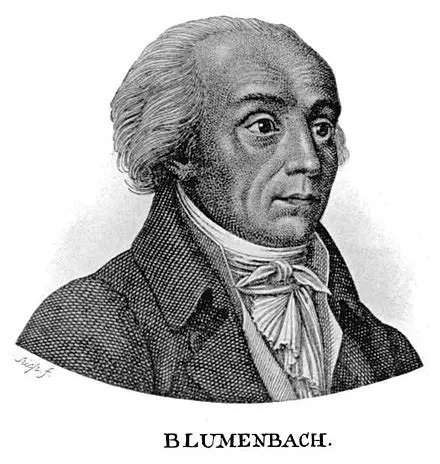
Blumenbach had been a "monogenist" — he believed all human races descended from a single original people, with the differences arising through environmental degeneration from the Caucasian ideal. But by the 1840s, American scientists had radicalized his framework into something even more useful: "polygenism" — the theory that different races were separately created, constituted distinct biological species, and were therefore permanently and naturally unequal.
The "American School of Ethnology" — led by Josiah Nott of Mobile, Alabama, and using Morton's skull data as its empirical foundation — argued that the Bible's account of a single human creation was simply wrong. Black people were a different species than white people. This was not a minor scholarly dispute. In a nation debating slavery, the claim that Africans were a different species was a political weapon of enormous power: if they were not the same species as their enslavers, the rights arguments of abolitionists didn't apply to them.
Louis Agassiz, the most prestigious naturalist in America — a Harvard professor, the founder of what became the Museum of Comparative Zoology — provided the movement its most authoritative voice. He had arrived in America as a monogenist. Then, in 1846, he encountered Black Americans for the first time while staying in Philadelphia. He wrote to his mother describing the visceral physical disgust he felt — "the black color, the wooly hair, the compressed cranium." He subsequently theorized this gut reaction into a scientific conclusion about separate origins and permanent biological difference. The sequence is revealing: the disgust came first. The science was constructed to explain and justify the disgust.
"I experienced pity at the sight of this degraded and degenerate race, and their lot inspired me with compassion in thinking that they are really men."
— Louis Agassiz, letter to his mother, 1846 — on first encountering Black Americans in Philadelphia
Agassiz Had His Photograph Taken
In 1850, Agassiz commissioned daguerreotype photographs of enslaved people in South Carolina — men and women stripped to the waist and photographed from the front and side — to provide visual "scientific" evidence for his racial typology. The photographs were discovered in the attic of Harvard's Peabody Museum in 1976. The enslaved people were identified later: Renty Taylor and his daughter Delia, among others. Their descendants have been fighting for the return of the photographs ever since. A 2021 lawsuit by Tamara Lanier, a descendant of Renty, argued that Harvard has profited for 170 years from photographs taken of her ancestors without consent, under conditions of slavery, for the purpose of scientific racism. Harvard has resisted the return.
1883
Francis Galton coins "eugenics" — the science of improving the racial stock of humanity through selective breeding
60,000+
Americans forcibly sterilized under state eugenics programs — disproportionately Black, Indigenous, poor
1927
Buck v. Bell: Supreme Court upholds forced sterilization, 8–1. "Three generations of imbeciles are enough." — Oliver Wendell Holmes
The logical endpoint of Blumenbach's taxonomy was eugenics: if races were biologically distinct and hierarchically ranked, then the "improvement" of the human race meant promoting reproduction among "superior" races and preventing it among "inferior" ones. Francis Galton — Charles Darwin's cousin — coined the term in 1883 and built it into a full scientific and social movement.
American eugenics was not a fringe movement. It was mainstream science, taught at major universities, funded by the Carnegie Institution and the Rockefeller Foundation, and implemented as state law in 32 states by 1935. The targets were "the unfit" — a category that in practice meant the poor, the disabled, immigrants from Southern and Eastern Europe, and disproportionately Black and Indigenous people. More than 60,000 Americans were forcibly sterilized under these programs. In 1927, the Supreme Court upheld the constitutionality of forced sterilization in Buck v. Bell — a ruling that has never been explicitly overturned.
American eugenics was also the explicit model for Nazi Germany's racial hygiene program. German scientists attended American eugenics conferences. The Nazi regime translated and studied American sterilization statutes when designing their own. Heinrich Himmler cited American race laws as a model for the Nuremberg Laws. The Holocaust is, in part, American scientific racism with the restraints removed. The line from Blumenbach's five skulls to the gas chambers runs through Morton's measurements, through Galton's eugenics, through Harry Laughlin's sterilization model statutes, through the willing co-authorship of American scientists and legislators who built the intellectual infrastructure that Germany industrialized.
Blumenbach's Taxonomy: The Downstream Events
1839
Morton's Crania Americana
Skull measurements "prove" Blumenbach's hierarchy. Cited by pro-slavery advocates as scientific justification for African enslavement.
1854
American School of Ethnology
Nott & Gliddon's Types of Mankind argues different races are different species. Bestseller in antebellum America.
1882
Chinese Exclusion Act
First U.S. law to bar immigration by race. Justified partly by scientific claims about Asian racial inferiority.
1907
Indiana Eugenics Law
First state forced sterilization law in the world. The direct application of Blumenbach's hierarchy to reproductive policy.
1924
Immigration Act of 1924
Restricted immigration by national origin quotas designed to preserve the "racial composition" of America. Banned most Asian immigration entirely.
1935
Nuremberg Laws
Nazi racial laws stripping Jews and other "non-Aryans" of citizenship. Explicitly modeled on American race law. German lawyers cited Buck v. Bell in drafting them.
1941–1945
The Holocaust
The industrial extermination of 6 million Jews and millions of Roma, disabled people, and others classified as racially "unfit." The endpoint of the tradition Blumenbach's taxonomy initiated.