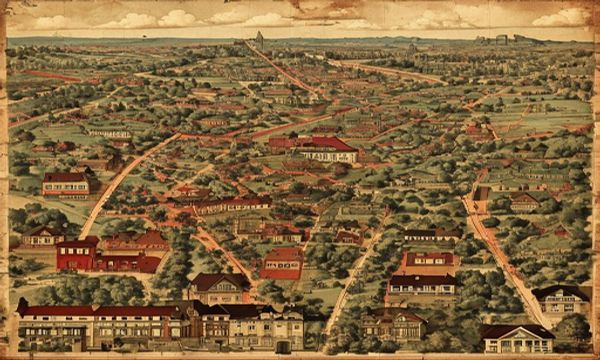
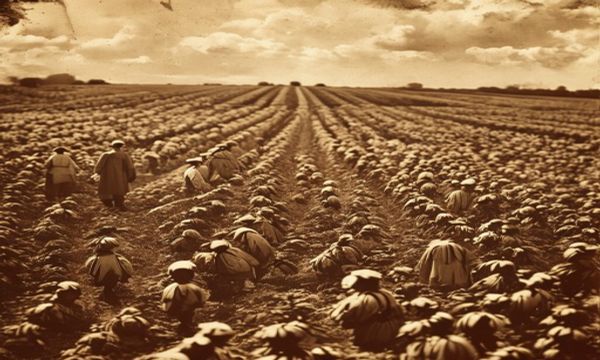
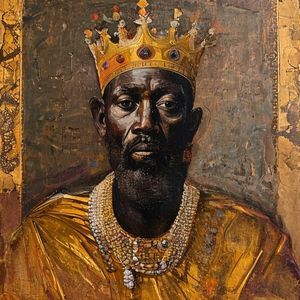
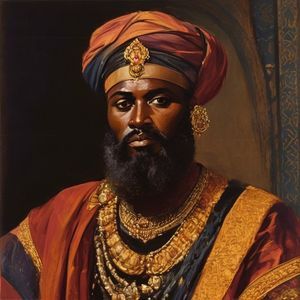
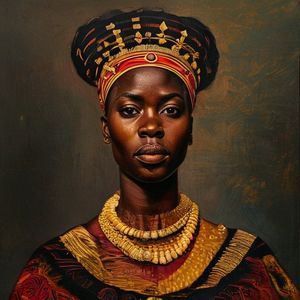
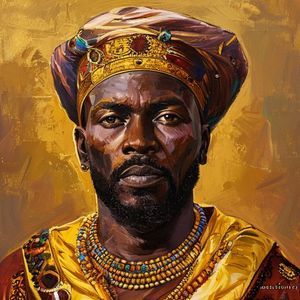
New thread: Before the slave trade — the civilizations, kingdoms, and intellectual traditions that were deliberately destroyed.

Browse the archive

Threads, people, policies,
places — connected.

Every entry in Chain is part of a causal thread. Browse the full archive or follow a chain from its origin to its present-day consequence.

5 Threads
30 People
8 Policies & Laws
10 Key Events
9 Places

Threads

5 threads

People

30 profiles
African Origins · 300 BCE – 1600 CE
Scientific Racism · 1775–1900
Abolition Era · 1790s–1870s
Civil Rights Era · 1900s–1970s
W.E.B. Du Bois
W.E.B. Du Bois
Co-founder of the NAACP and editor of The Crisis who built the intellectual framework for understanding race as a constructed system of power.
1868–1963
Ida B. Wells
Ida B. Wells
Journalist and anti-lynching activist who documented racial terror campaigns with statistical precision when the white press celebrated them.
1862–1931
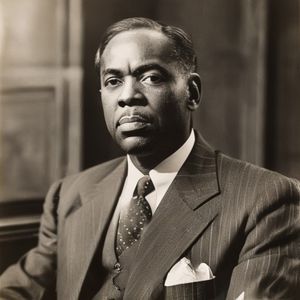
Charles Hamilton Houston
The legal architect of the civil rights movement. Trained Thurgood Marshall and designed the strategy that dismantled legal segregation.
1895–1950
Bayard Rustin
Organized the 1963 March on Washington in 8 weeks and introduced Gandhian nonviolence to King — then was erased from history because he was gay.
1912–1987
Thurgood Marshall
Lead counsel in Brown v. Board of Education. First Black justice on the U.S. Supreme Court.
1908–1993
Fannie Lou Hamer
Voting rights activist who exposed the systematic disenfranchisement of Black voters before a national television audience in 1964.
1917–1977
Medgar Evers
NAACP field secretary in Mississippi who spent a decade investigating racial murders — until a white supremacist shot him in his driveway. His killer lived free for 31 years.
1925–1963
John Lewis
Chairman of SNCC, Freedom Rider, survivor of Bloody Sunday — then 33 years in Congress. Arrested 45 times for civil disobedience. Called it "good trouble."
1940–2020
Shirley Chisholm
First Black woman elected to Congress and first Black American to seek a major party's presidential nomination — "Unbought and Unbossed."
1924–2005
Malcolm X
Minister, organizer, and the most forceful voice for Black self-determination in the 20th century — whose philosophy evolved far beyond how his opponents defined it.
1925–1965
Modern Era · 1970s–Present
Fred Hampton
Chairman of the Illinois Black Panther Party at 20. Built the Rainbow Coalition uniting gangs, Puerto Rican nationalists, and poor white Appalachians. Assassinated in his bed at 4:45 a.m. by Chicago police acting on FBI intelligence. He was 21. His fiancée was eight months pregnant.
1948–1969
Huey P. Newton
Co-founder of the Black Panther Party, whose survival programs fed 20,000 children daily before the federal breakfast program existed — and whose organization J. Edgar Hoover called the greatest internal threat to America.
1942–1989
Nation of Islam
Founded Detroit 1930. Built 100+ mosques, schools, farms, and the largest Black newspaper in America under Jim Crow. Produced Malcolm X, destroyed his career, and whose members assassinated him. Louis Farrakhan leads it today.
1930–present
Bobby Seale
Co-founder and chairman of the Black Panther Party. Bound and gagged by a federal judge for insisting on his constitutional right to counsel. All charges eventually dropped. The organization he built was destroyed by an illegal FBI program. No agents were prosecuted.
1936–present
Eldridge Cleaver
Black Panther Minister of Information and author of Soul on Ice. Fled to Algeria after a 1968 Oakland shootout, split publicly with Huey Newton in 1971, returned to the U.S. in 1975, and became a born-again Republican. One of the movement's most contradictory figures.
1935–1998
Weather Underground
White radical left organization that declared war on the U.S. government after Fred Hampton's assassination. 20+ bombings of the Capitol, Pentagon, and NYPD — no civilian casualties. Seven years underground. Charges dropped because the FBI's pursuit was itself illegal.
1969–1977
Symbionese Liberation Army
Bay Area cell that assassinated Oakland's first Black school superintendent — condemned by every Black liberation organization — then kidnapped Patty Hearst. Six members died in a live-television LAPD shootout in 1974. Led by a man who had been a police informant.
1973–1975
Bunchy Carter
Founded the Southern California Black Panther Party, turning the Slausons into a revolutionary force. Assassinated at UCLA in 1969. The FBI manufactured the conflict that killed him — documents proved it seven years later.
1942–1969
Angela Davis
Philosopher and prison abolitionist placed on the FBI Most Wanted list at 26, acquitted of all charges, and author of the intellectual framework for dismantling mass incarceration.
1944–present
Richard Rothstein
Historian who documented the federal government's deliberate construction of residential segregation in The Color of Law.
1938–present
Ira Katznelson
Political scientist who documented how the New Deal and GI Bill systematically excluded Black Americans from the wealth-building programs that built the white middle class.
1944–present

Policies & Laws

8 entries
Slavery Era · 1619–1865
1829
Borderlands · Abolition
The Southern Underground Railroad
Mexico abolished slavery in 1829 — 36 years before the U.S. Thousands escaped south across the Rio Grande into free territory. Texas slaveholders launched a revolution to stop it.
1838
Self-Determination · Brooklyn · Abolition
Weeksville
A free Black community in Brooklyn with its own church, school, newspaper, and eldercare — a parallel city within a city. Sheltered hundreds of Black New Yorkers during the 1863 Draft Riots. Rediscovered from a plane in 1968.
1825
Property · Erasure · Urban History
Seneca Village
A Black landowning community of 264 residents in upper Manhattan — three churches, a school, voters. Seized by eminent domain in 1857 to build Central Park. The press called them squatters. They held deeds.
1865
Policy · Law
Black Codes
Laws passed immediately after emancipation in Southern states to re-impose labor coercion and restrict Black freedom. Predecessor to Jim Crow.
New Deal & WWII Era · 1930s–1940s
1933
Policy · Federal Program
Home Owners' Loan Corporation (HOLC)
The federal agency that created the "security maps" — color-coded by race — that defined redlining and shaped American residential segregation for generations.
1934
Policy · Federal Law
National Housing Act (FHA)
Created the Federal Housing Administration, which institutionalized redlining by refusing to insure mortgages in Black neighborhoods, systematically blocking Black homeownership.
1944
Policy · Federal Law
GI Bill (Servicemen's Readjustment Act)
Subsidized college, low-interest mortgages, and business loans for WWII veterans — but administered through segregated local offices that largely excluded Black veterans, accelerating the racial wealth gap.
1944
Military · Integration
The Golden Thirteen
After 168 years, the U.S. Navy commissioned its first Black officers — thirteen men trained under a harder standard than white candidates, then assigned to shore duty and kept off combat ships.
Civil Rights Era · 1960s
1965
Policy · Federal Law
Voting Rights Act
Prohibited discriminatory voting practices. Gutted by Shelby County v. Holder (2013), which removed the preclearance requirement for states with histories of voter suppression.
1968
Policy · Federal Law
Fair Housing Act
Prohibited housing discrimination — passed four days after Martin Luther King Jr.'s assassination. Enforcement has remained structurally weak for over 50 years.

Key Events

10 entries
Slave Trade · 1441–1808
1441–
Event · Ongoing
The Middle Passage
The transatlantic voyage that killed an estimated 1.8 million people. Conditions were deliberately brutal — captives were chained below deck for months in spaces too small to sit upright.
1619
Event · Founding moment
Point Comfort, Virginia
A White Lion ship delivers "20 and odd" enslaved Africans to the English colony — the first documented arrival of enslaved people in English North America. The 246-year clock begins.
Reconstruction & Its Collapse · 1865–1900
1865
Event · Legal turning point
Emancipation & the 13th Amendment
Slavery abolished — with a carve-out: "except as punishment for a crime." That exception became the legal architecture for Black Codes, convict leasing, and eventually mass incarceration.
1877
Event · Political turning point
The Compromise of 1877
Federal troops withdrawn from the South in a backroom deal to resolve the contested 1876 presidential election. Reconstruction ends. The brief experiment in Black political power is crushed.
20th Century · 1900s–1960s
1910–
Event · Mass movement
The Great Migration
Six million Black Americans left the South between 1910 and 1970 to escape racial terror and seek economic opportunity — only to be met by restrictive covenants and redlined neighborhoods in Northern cities.
1912
Property · Eminent Domain · Reparative Justice
Bruce's Beach
Willa and Charles Bruce built the only Pacific Coast Black beach resort in 1912. Condemned by Manhattan Beach in 1924 "for a park" — the land sat empty for years. In 2022, LA County returned the land to the Bruce family's descendants.
1921
Event · Destruction of wealth
Tulsa Race Massacre
The Greenwood District — "Black Wall Street" — was destroyed in 18 hours by a white mob aided by local law enforcement and the Oklahoma National Guard. 35 blocks leveled. Up to 300 people killed. No reparations paid.
1954
Event · Supreme Court
Brown v. Board of Education
Declared school segregation unconstitutional. But because school assignment tracked residential segregation — enforced by HOLC maps — school integration never fully materialized in most American cities.

Places

9 entries
African Civilizations
c. 1235
Place · Empire
The Mali Empire
At its peak, covered an area larger than Western Europe. Controlled trans-Saharan trade routes in gold, salt, and copper. Home to Mansa Musa I, history's wealthiest individual.
c. 1464–1591
Empire · West Africa
The Songhai Empire
The largest empire in African history — 1.4 million sq km, a professional bureaucracy, a river navy, and Timbuktu's Sankore University with 25,000 students. Destroyed at the Battle of Tondibi in 1591 by a Moroccan army armed with European arquebuses.
c. 1100
Place · City
Timbuktu
One of the world's great centers of Islamic scholarship. Sankore University housed up to 25,000 students at its peak. Home to the Ahmed Baba Institute's 700,000 surviving manuscripts.
c. 1070 BCE
Place · Kingdom
Kingdom of Kush / Nubia
Predated and at times ruled ancient Egypt. Built more pyramids than Egypt. A sophisticated civilization whose contributions are systematically excluded from mainstream historical narratives.
American Geography
1906–1921
Place · Neighborhood
Greenwood District, Tulsa
"Black Wall Street." The most prosperous Black community in American history — 600 businesses, a hospital, a law school, a bus system — destroyed in 18 hours in 1921.
1910–
Place · Neighborhood
Chicago's South Side
A case study in manufactured segregation. The Great Migration brought hundreds of thousands of Black Americans here — only to be confined by restrictive covenants and HOLC redlining into an overcrowded "Black Belt."