The Archive
Every consequence
has an origin.
A thread traces the full causal chain from a historical act to its present-day consequence — showing the decisions, policies, and people that link them. Not just what happened. Why it still matters.
Before the Chain: 7 African Empires
The narrative that Black history begins with slavery is historically false — and politically useful. Before the slave trade, Africa was home to some of the world's most sophisticated civilizations. Kush, Axum, Mali, Songhai, Benin, Great Zimbabwe, Oyo. Understanding what was destroyed is the first link in the chain.
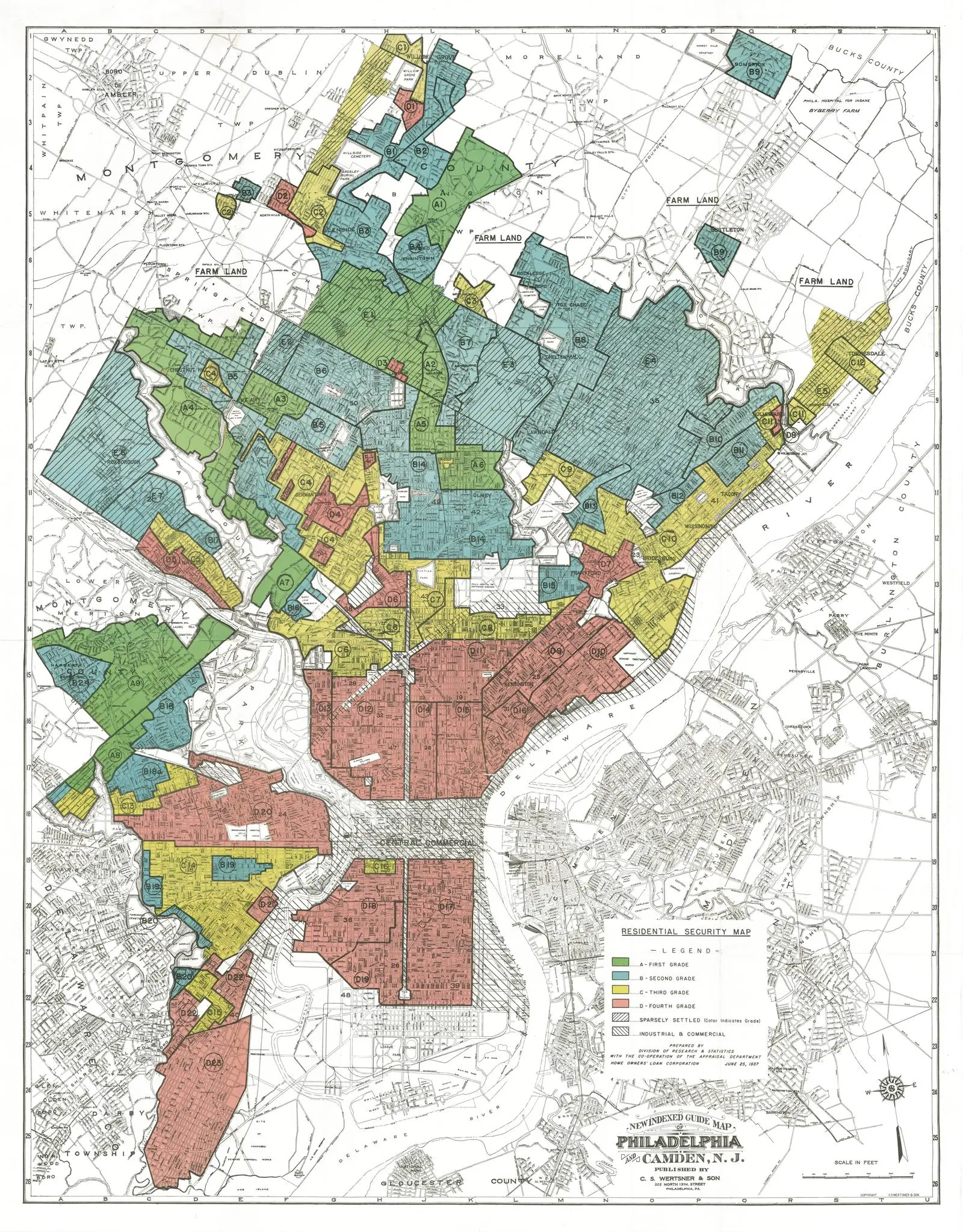
From Redlining to the Racial Wealth Gap
How a 1930s federal mortgage policy — drawn on maps, color-coded by race — continues to determine school quality, health outcomes, and generational wealth. The HOLC maps are gone. Their consequence isn't.
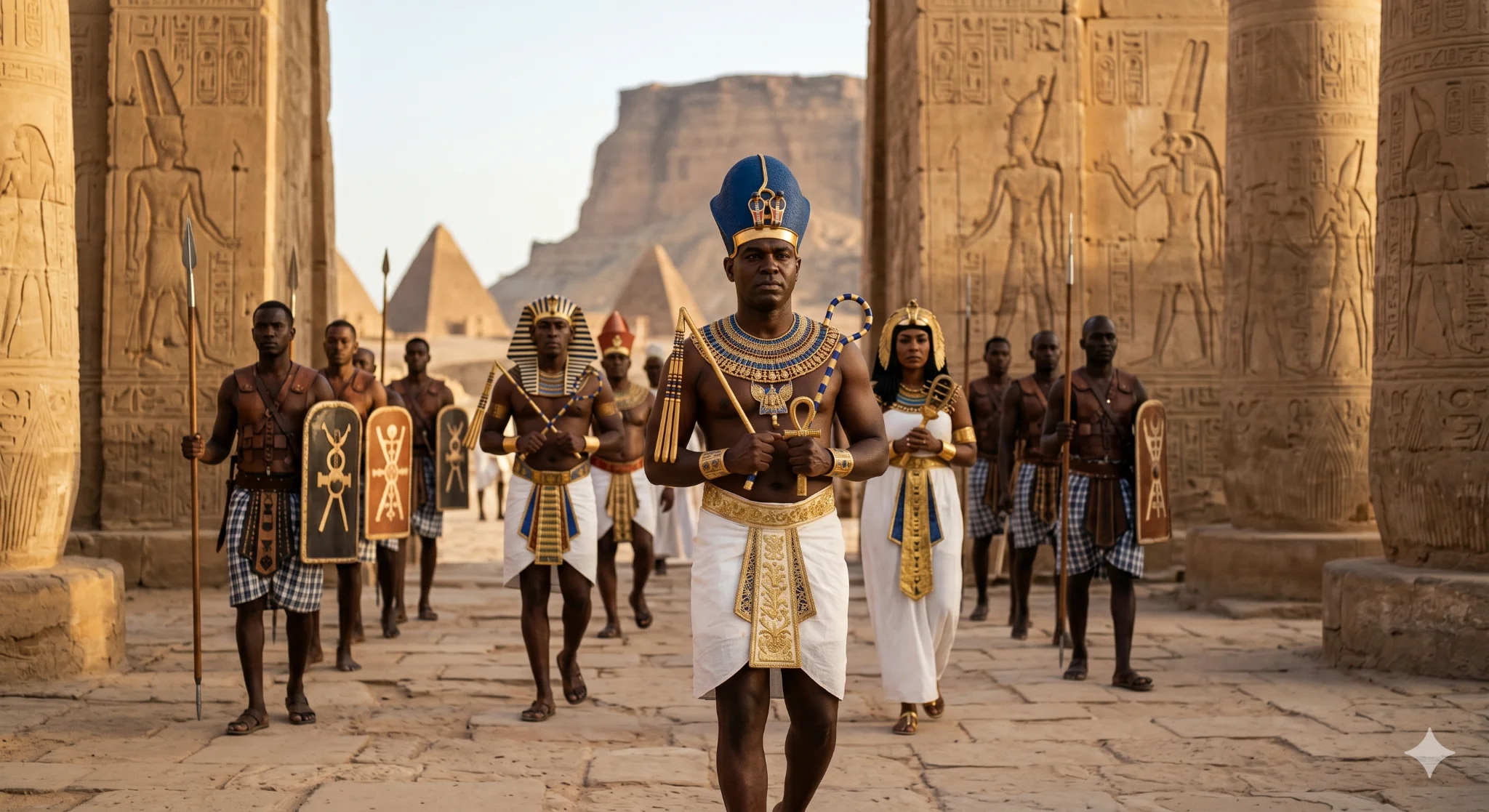
The Black Pharaohs: Egypt's African Kings
Ancient Egypt was an African civilization — built, ruled, and perpetuated by African people. This thread traces 10 of the most consequential pharaohs in Egyptian history, from Narmer's unification to Taharqa's appearance in the Hebrew Bible, and examines the 19th-century scholarly project that deliberately erased their African identity to justify slavery and colonialism.
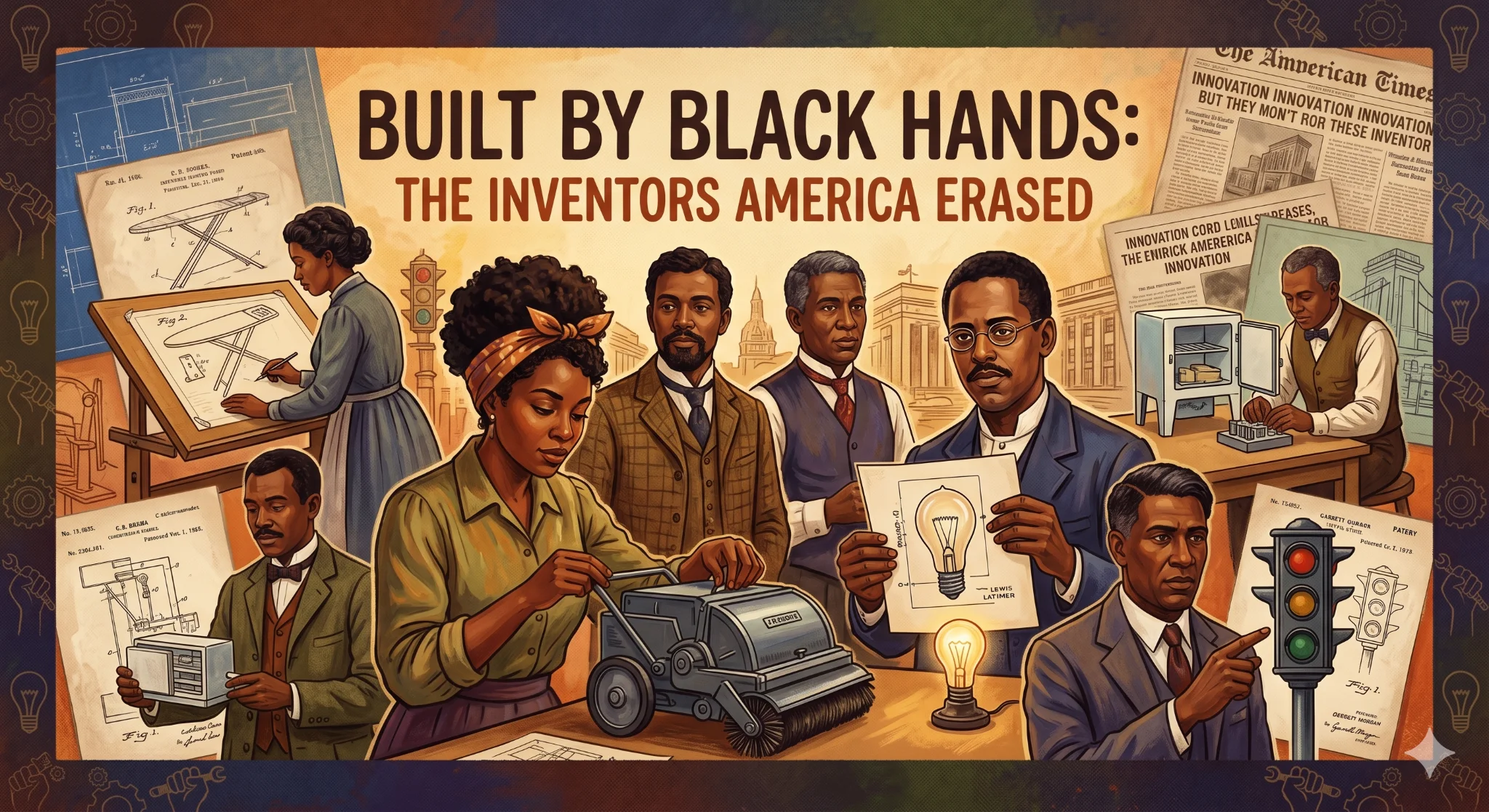
Built by Black Hands: The Inventors America Erased
The traffic light. The light bulb filament. The blood bank. The gas mask. The microphone in your phone. The video game cartridge. 20 Black inventors, 200 years of patents — and the systematic extraction of their wealth and erasure of their names from the record.
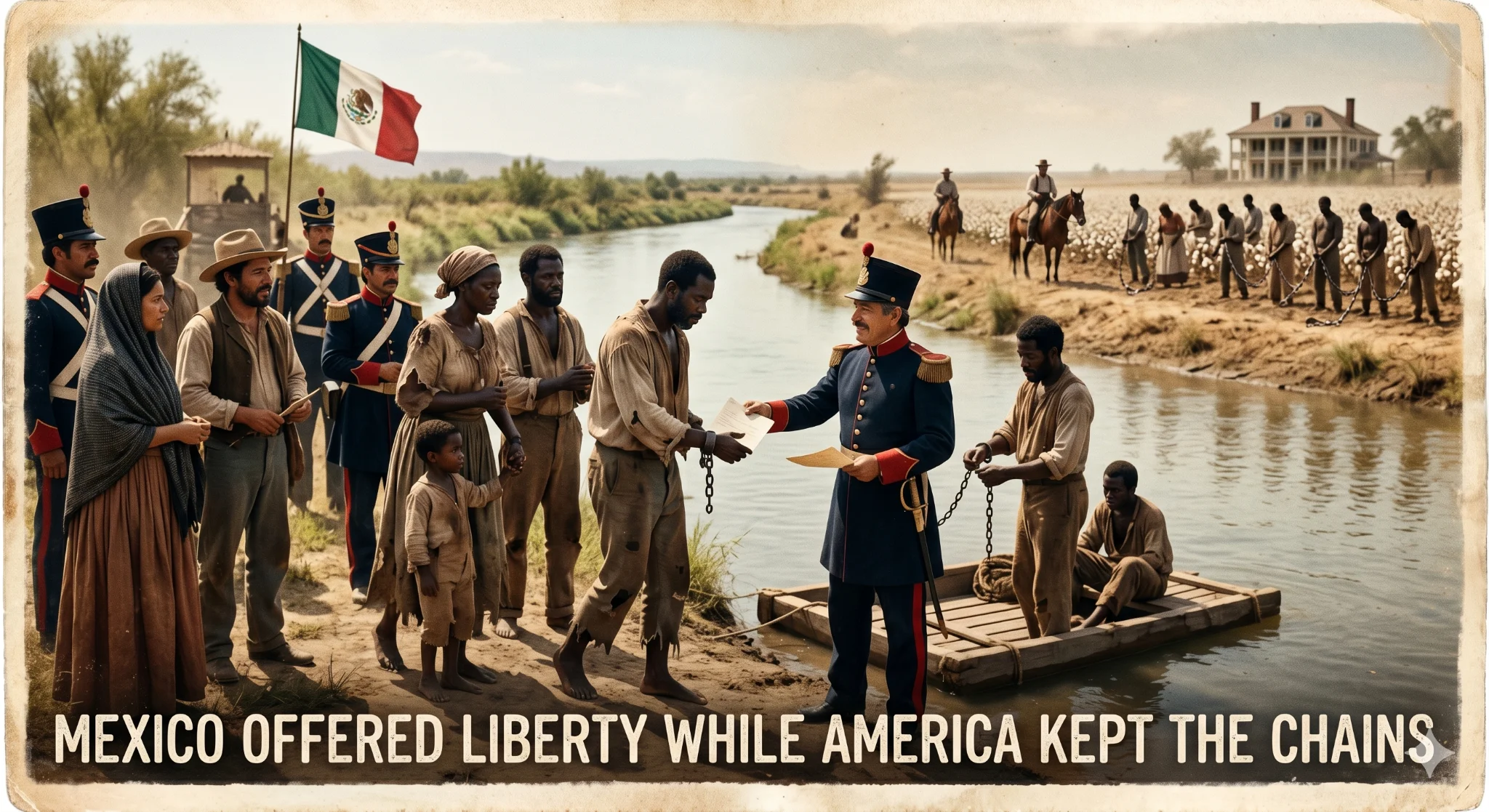
South to Freedom: Mexico Offered Liberty While America Kept the Chains
Mexico abolished slavery in 1829 — 36 years before the United States. Thousands of enslaved people escaped not north to Canada but south across the Rio Grande, where the U.S. had no legal authority to reclaim them. Texas slaveholders launched a revolution partly to stop it. The Southern Underground Railroad is the half of the story America forgot.
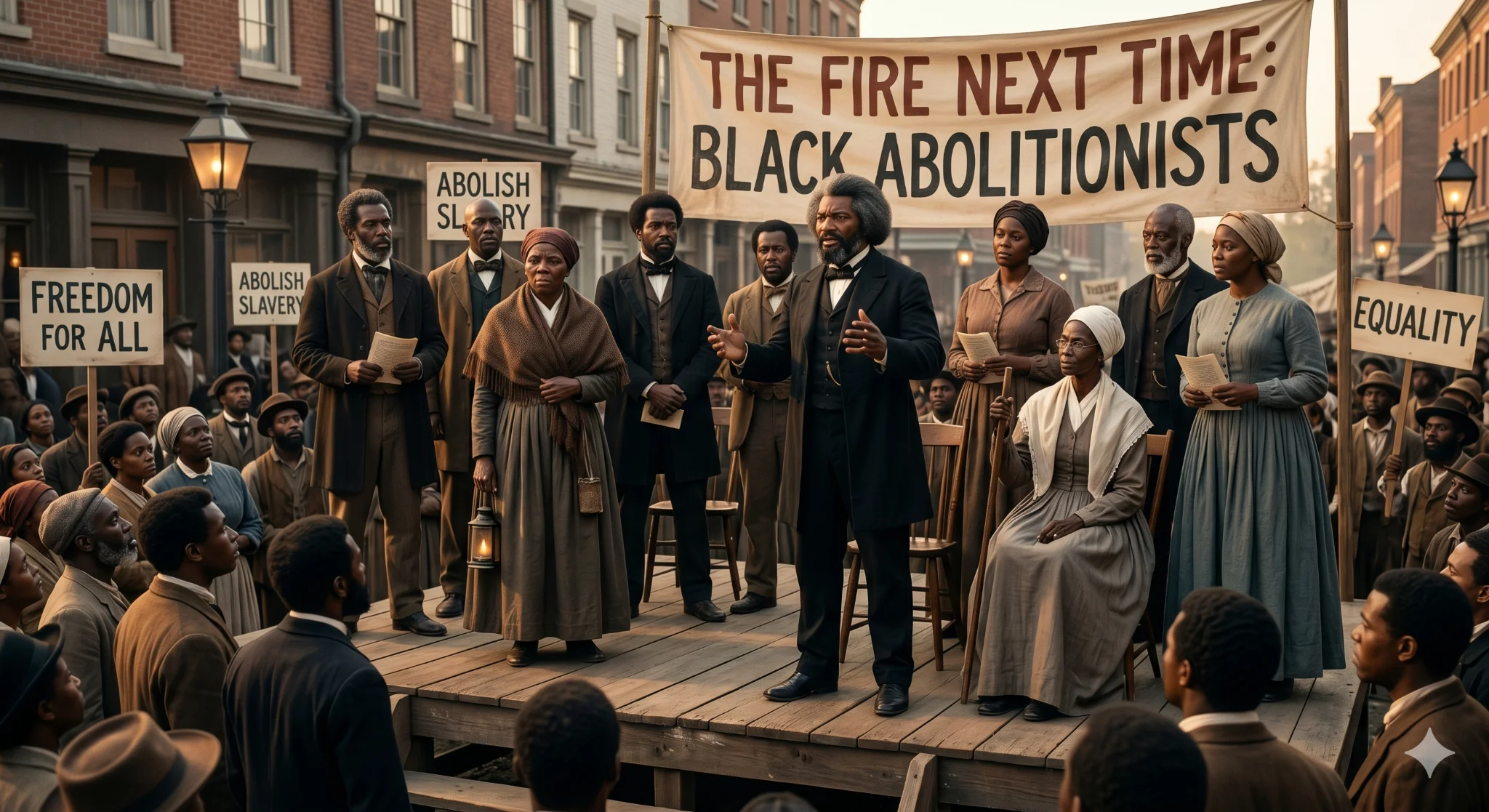
The Fire Next Time: Black Abolitionists, 1829–1865
David Walker. Frederick Douglass. Harriet Tubman. Henry Highland Garnet. Sojourner Truth. Before the Civil War was a military conflict, it was a moral argument — and Black Americans made it first. Walker wrote the Appeal in 1829. The war came 32 years later.
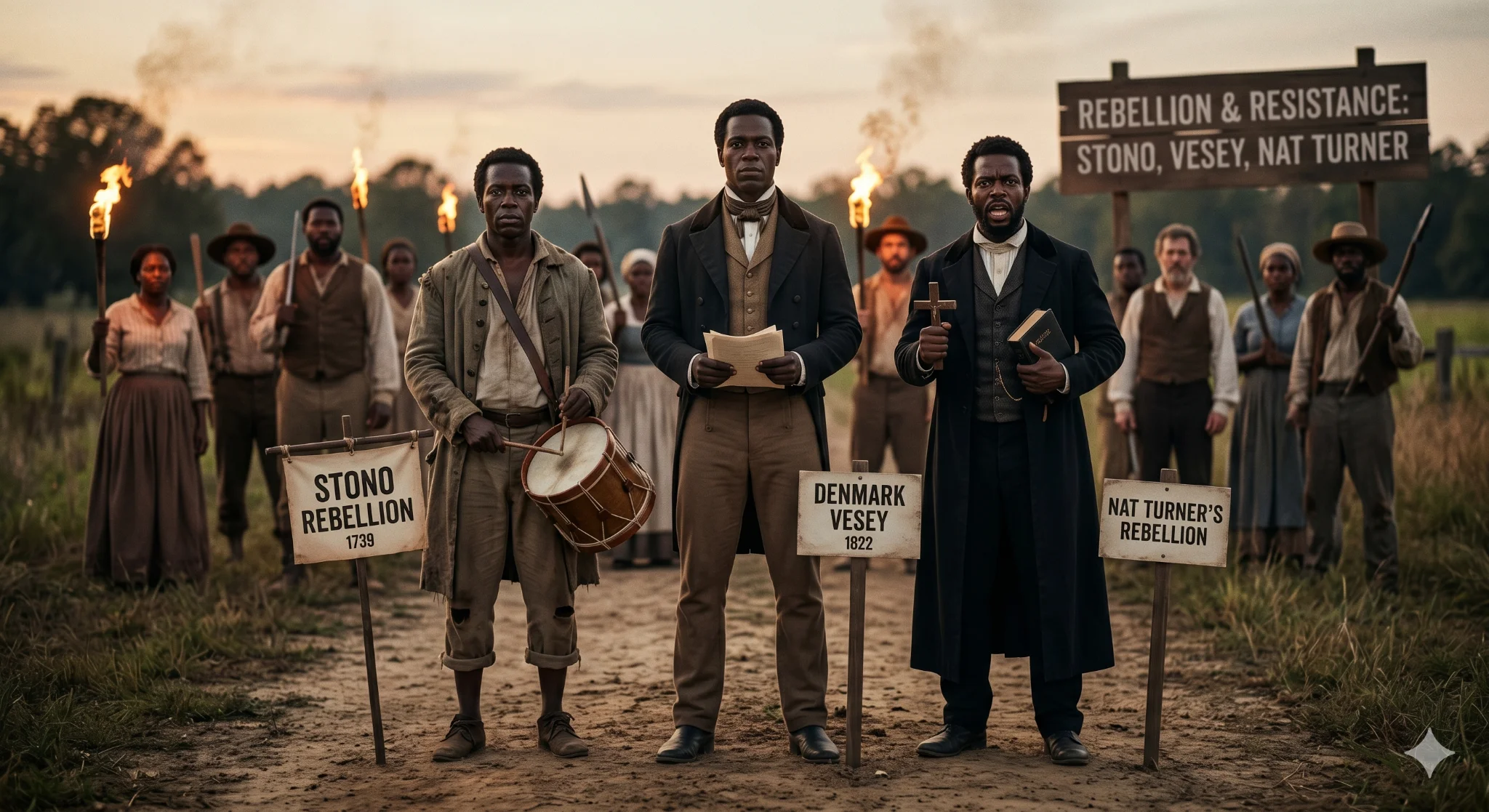
The Fire from Below: Slave Revolts in America
250+ documented revolts in the American South. Stono, 1739. Denmark Vesey, 1822. Nat Turner, 1831. Every major uprising was followed by new laws — not just punishing rebels, but stripping rights from all enslaved and free Black people. The revolts shaped American law. Their suppression built the slave patrol, the precursor to American policing.
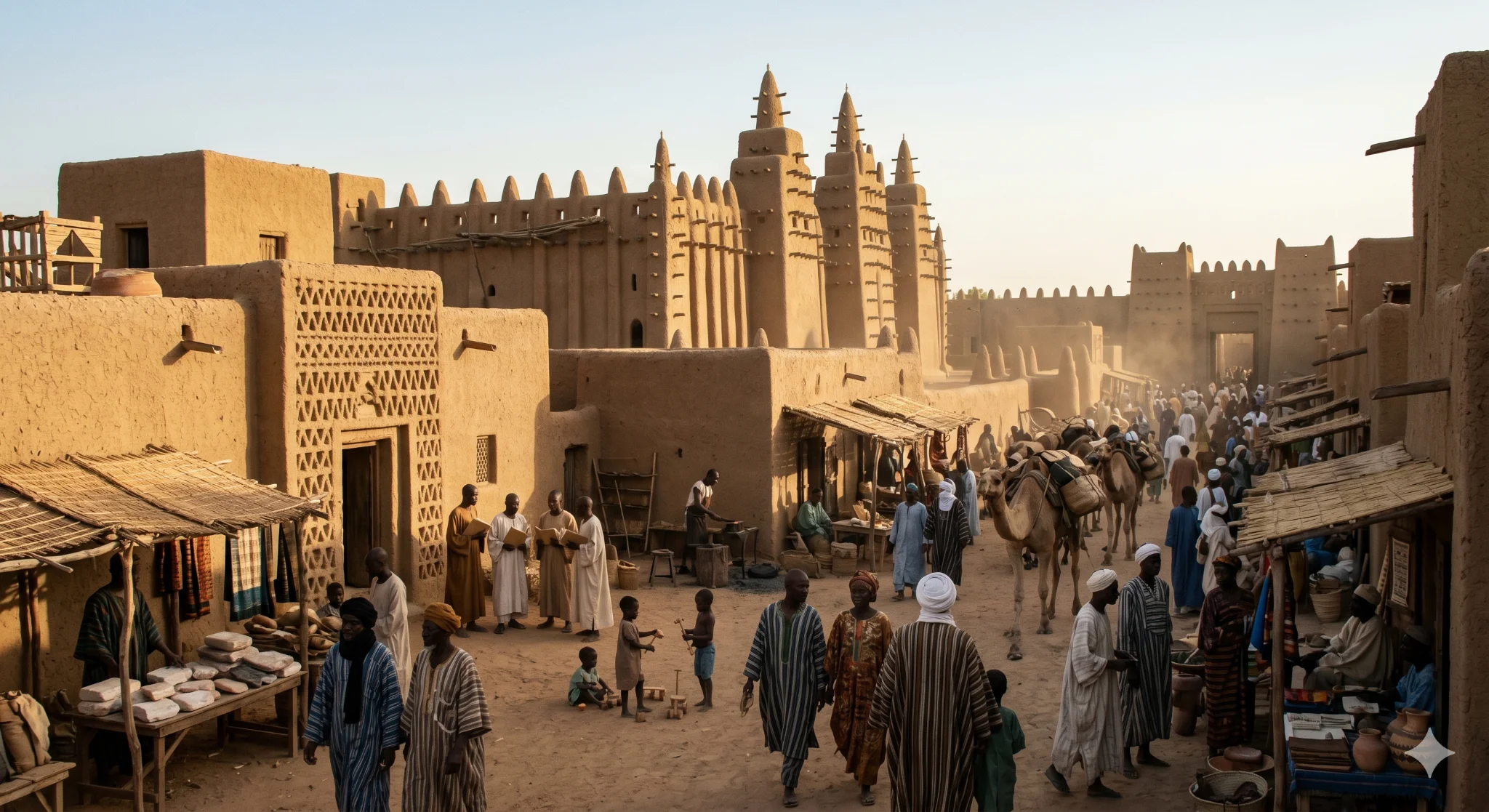
The Songhai Empire: The Largest in African History — and How It Was Erased
At its peak under Askia Muhammad I, Songhai stretched 1.4 million square kilometers across West Africa with a professional bureaucracy, a standing army, a river navy, and a university at Timbuktu that enrolled 25,000 students. In 1591, a Moroccan army of 4,000 with European arquebuses ended it in one battle. Then three centuries of historians declared Africa had no history — and 700,000 Timbuktu manuscripts were quietly saved from an Islamist raid in 2013.
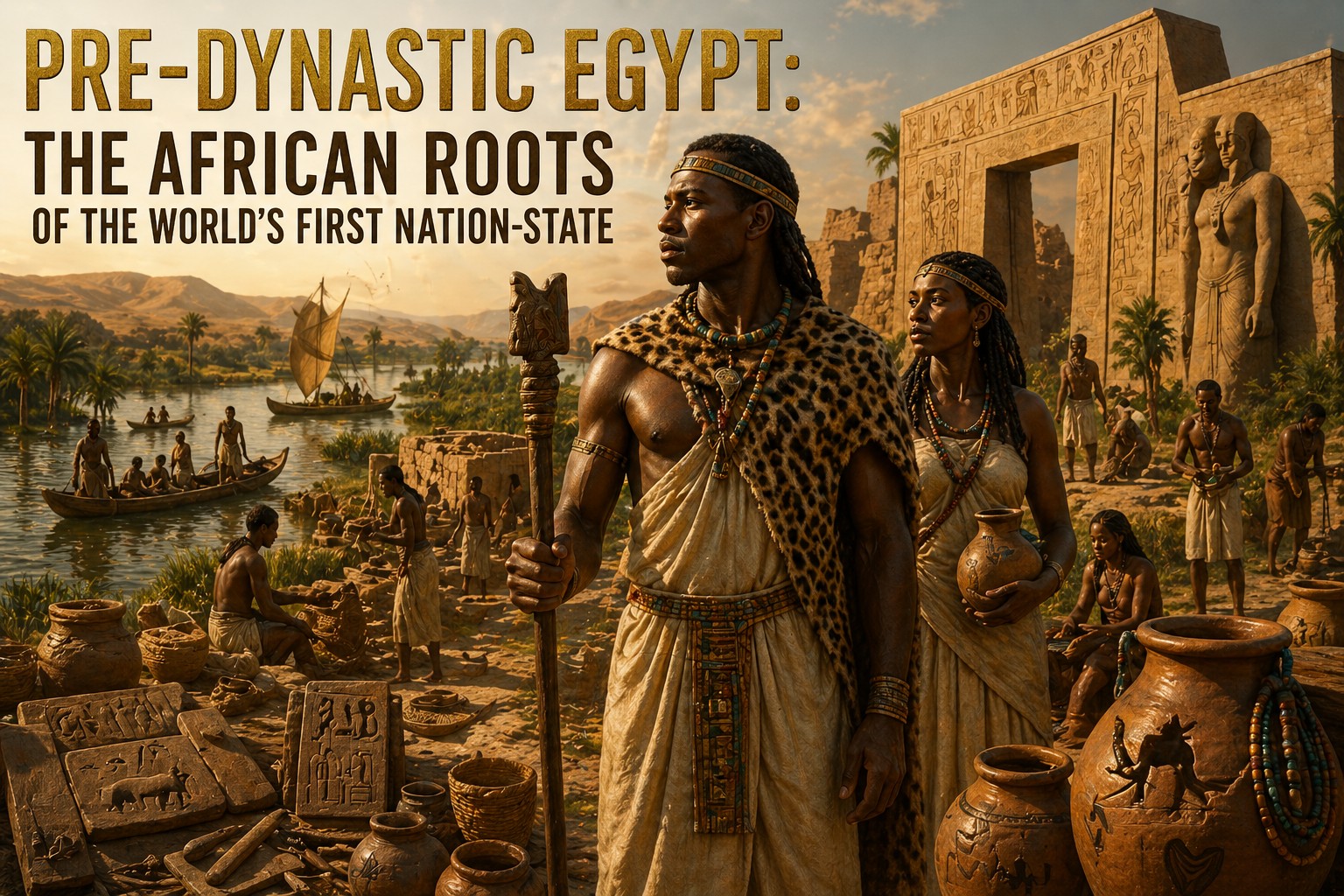
Pre-Dynastic Egypt: The African Roots of the World's First Nation-State
Before the pharaohs, before the pyramids — a 2,000-year period of state formation in the Nile Valley that gave rise to the world's first nation-state. The people were African. The culture was African. The debate over who gets to claim this history has never really been about archaeology.
Imhotep: The World's First Doctor — and How Hippocrates Got the Credit
Imhotep was a physician, architect, and sage who lived in Egypt around 2,650 BCE — two thousand years before Hippocrates was born. He is the first named physician in recorded history. He built the first large stone structure on earth. He was deified as a god of medicine by the Greeks and Romans. You probably learned about Hippocrates instead.
Africa Invented the World's Mathematics
The oldest mathematical object on Earth was carved in the Congo 20,000 years ago. The first algebra problems were written in Egypt. The first geometric calculations are African. When Greek philosophers traveled to learn mathematics, they went to Africa. The story of math begins here — and was then attributed to everyone else.
The Black Pharaohs: Egypt's African Kings
For nearly a century, Nubian kings from the Kingdom of Kush ruled Egypt as its 25th Dynasty. They were among Egypt's most devout restorers — rebuilding temples, reviving ancient traditions, and holding off the Assyrian Empire. Their story was buried for 2,500 years.
The Kingdom of Aksum: Africa's Ancient Superpower
At its height, the Kingdom of Aksum was one of the four great powers of the ancient world — alongside Rome, Persia, and China. It minted its own coins, built towering obelisks, adopted Christianity in 330 CE, and controlled trade routes from the Red Sea to the Indian Ocean.
Great Zimbabwe: The City Europeans Said Africans Couldn't Build
A city of 18,000 people, enclosed by dry-stone walls 11 meters high, built without mortar between 1100 and 1450 CE. When Europeans found it, they attributed it to Phoenicians, Arabs, or King Solomon — anyone but the African people who built it. The cover-up was official Rhodesian government policy until 1980.
The Swahili Coast: Africa's Global Trade Network
For 700 years, the city-states of East Africa's Swahili Coast were among the world's great trading hubs — exporting gold, ivory, and iron to Arabia, India, and China. Ibn Battuta called Kilwa the most beautiful city in the world. The Portuguese burned it in 1505.
The Arab Slave Trade: 1,300 Years Before the Ships
The transatlantic slave trade lasted 400 years and enslaved 12.5 million Africans. The Arab slave trade lasted 1,300 years — from 650 CE to the early 20th century — and enslaved an estimated 17 million. It predated European slavery, overlapped with it, and in many regions outlasted it. Saudi Arabia abolished slavery in 1962. Mauritania criminalized it in 2007. Understanding this history doesn't diminish the transatlantic trade — it expands the frame.
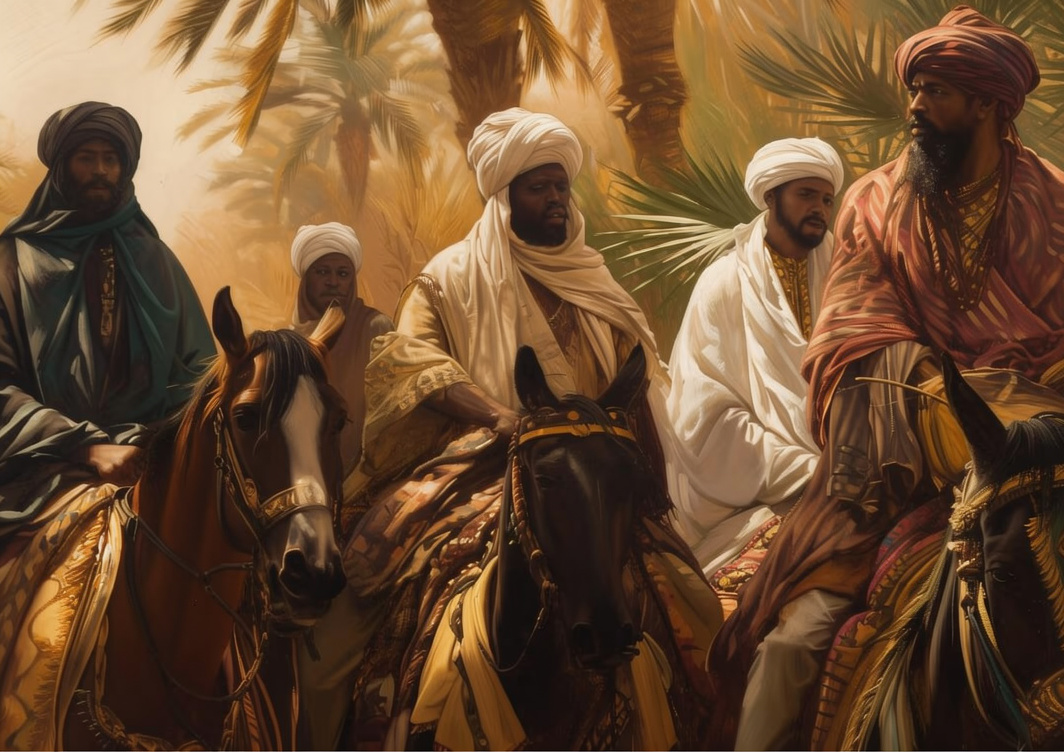
Al-Andalus: The Moorish Civilization Europe Erased From Its Own History
For 781 years, Muslim Africans governed the most advanced civilization in medieval Europe. Córdoba had 500,000 people, 70 libraries, and 900 public baths when London had 15,000 people and no sewers. Then the Reconquista expelled them, burned a million books, invented the first racial purity laws in European history — and Columbus sailed. All in the same year. The erasure was not incidental. It was the precondition for everything that followed.

The Rupture: The Transatlantic Slave Trade, 1441–1808
12.5 million people. 400 years. The largest forced migration in human history — and the economic foundation of the modern world. Portuguese raids in 1441, Elmina Castle, the Middle Passage, 1619 in Virginia. Every thread on this site flows from this one.
Resistance on the Middle Passage: They Fought Back
At least 485 documented shipboard revolts occurred during the transatlantic slave trade. Enslaved Africans refused food, organized uprisings, communicated across language barriers, jumped overboard rather than be delivered into bondage — and in 1839, 53 Africans on La Amistad seized the ship and won their freedom at the U.S. Supreme Court. The standard narrative buries this. The historical record does not.
The Code Noir: France Wrote the Rules of Slavery
In 1685, Louis XIV issued the Code Noir — 60 articles that defined enslaved people as property, authorized ear removal for a first escape attempt, hamstringing for a second, and death for a third, and made killing an enslaved person non-prosecutable without "special circumstances." Its Louisiana version, issued in 1724, was imported directly into American law. The legal DNA of Jim Crow runs through Paris.
Stolen Labor: The Architecture of the Racial Wealth Gap
250 years of unpaid labor. Sharecropping. Tulsa burned. Redlining. GI Bill exclusion. The $171,000 median wealth gap between white and Black families is not a mystery — it is arithmetic. This thread shows the math.
The 13th: Mass Incarceration & the Second Slavery
Black Codes in 1865. Convict leasing. Nixon's War on Drugs — his aide later confessed the real purpose. The crack/powder disparity. 2.3 million incarcerated today. The 13th Amendment banned slavery except as punishment for crime. That exception became a system.
The Pipeline: How Rap Was Captured and Communities Were Criminalized
Rap music was invented in the South Bronx as a community technology. Within twenty years it was owned by four conglomerates, distributed through radio controlled by one company, and rewarded for content that made mass incarceration easier to justify. The same institutional investors held the prison stocks and the media stocks. Nobody had to hold a meeting. The incentives aligned automatically.
The Body as Evidence: Black Health Disparities
J. Marion Sims. Tuskegee. Henrietta Lacks. Environmental racism. A 3.5x maternal mortality rate. COVID deaths. The health disparities are not biology — they are the record of specific decisions made by institutions over 400 years. The body holds the history.
Two and a Half Years Late: Juneteenth and the Promise That Wasn't
January 1, 1863: the Emancipation Proclamation. June 19, 1865: freedom finally arrives in Texas — 929 days later. The celebration that followed became Juneteenth. The broken promises that followed became everything else in this archive.
Same Ledger, New Name: Old Slavery to New Capitalism
Slavery and capitalism aren't sequential — they're the same system at different stages. Enslaved people were America's largest capital asset in 1860. When slavery ended, the extraction restructured: sharecropping, convict leasing, union exclusion, redlining, subprime, prison labor. Eight legal forms. One unbroken ledger.
How Slavery Really Ended
The standard story: Lincoln freed the slaves. The actual record: the enslaved freed themselves first. The Proclamation freed no one Lincoln controlled. The 13th Amendment built in an exception clause. 40 acres were promised and taken back in eight months. What followed was slavery under other legal names.
The Exception That Swallowed the Rule: The 13th Amendment Loophole
"Neither slavery nor involuntary servitude, except as punishment for crime…" The exception clause is still in the Constitution. Within a year of ratification, Southern states had written Black Codes to criminalize Black existence and trigger it. Convict leasing followed. Then Jim Crow. Then the War on Drugs. The loophole is the chain between 1865 and mass incarceration today.
America's Broken Promise: The Freedmen's Bureau
The Bureau of Refugees, Freedmen, and Abandoned Lands (1865–1872) was the federal government's one serious attempt at reparative justice: land redistribution, legal courts, schools, hospitals. President Andrew Johnson vetoed its renewal twice. The 40 acres were rescinded by presidential order. The Bureau's schools survive as HBCUs. The land promises do not.
The Freedmen's Bank: The First Great Theft of Black Savings
In 1865, Congress chartered the Freedmen's Savings Bank to hold the wages of formerly enslaved people. By 1874 — nine years later — it had collapsed through mismanagement and fraud by white trustees, wiping out $3.7 million in Black savings (over $80 million today). Frederick Douglass was installed as president to save it — then watched it fail. Congress never repaid the depositors. The institutional distrust it created persists to the present day.
The Ku Klux Klan: America's Terrorist Organization, 1865–Present
The Klan was founded in 1865 as a paramilitary insurgency to reverse Reconstruction — and it worked. By 1877, it had overthrown Black-majority governments across the South through systematic murder and intimidation, with federal complicity. It revived twice: as a mainstream "civic organization" with 4–6 million members in the 1920s, and as an anti-civil-rights terror network in the 1950s–60s. Its 160-year continuity is not an accident.
Buffalo Soldiers: Fighting for a Country That Wouldn't Fight for Them
After the Civil War, Congress created six all-Black Army regiments — the Buffalo Soldiers. For 80 years, Black men served with distinction in every U.S. conflict from the Indian Wars to World War II, fighting for rights they did not have at home, enforcing policies (including against Native nations) that made them instruments of the same imperial project that oppressed them. Their story is a study in loyalty, contradiction, and betrayal.
By Design: Why America Has No Universal Healthcare
Every other wealthy nation has universal healthcare. The US has spent over a century choosing not to — through AMA lobbying campaigns, deliberate racial exclusions, industry-funded ad wars, and $700 million in annual lobbying. This is the documented sequence.
The Right to Defend: Black Organized Self-Defense
From Ida B. Wells's 1892 call to arms to the Black Panthers' Oakland patrols — a continuous, documented tradition of organized self-defense. And the thread that runs through it: every time a Black community armed itself legally and effectively, the gun laws changed.
The Flooded City: Five Ways Black Communities Were Taken
Mob destruction. Federal bulldozers. Interstate highways. Literal flooding. Gentrification. Five mechanisms across 125 years — but the same neighborhoods, taken again and again. Tulsa, Tremé, Harlem, Bronzeville, Oakland. The through-line is documented policy, not bad luck.
The Racial Health Gap
Why do Black Americans die younger, suffer higher rates of chronic disease, and receive less pain management? A thread tracing medical racism from Reconstruction-era experimentation to today's maternal mortality crisis — where Black women die in childbirth at three times the rate of white women.
Before, During, and After: Who Black People Are
Black people are not defined by slavery. They are Yoruba, Akan, Igbo, Wolof, BaKongo — descendants of empires of gold, universities of manuscript, mathematicians and architects. This thread covers what was, what was taken, what survived the Middle Passage, and who Black people built themselves into on the other side.
The Man Who Invented Race: Johann Friedrich Blumenbach
In 1775, a German physician divided humanity into five races using a collection of skulls and named his own the most beautiful: "Caucasian." He called it science. It became the intellectual foundation for 250 years of slavery, colonialism, eugenics, and the Holocaust — a taxonomy invented to justify what was already policy.
The Invention of Race: Why Racism Was Created
Race is not biology — it is policy. In 1676, Black and white servants burned Jamestown together. Within a decade, Virginia had invented "whiteness" as a legal category to prevent that coalition from forming again. This thread documents who built racism, why, and how it has been maintained through law, science, religion, and media ever since.
Patrol and Punish: The Invention of American Policing
The first organized police forces in America were slave patrols. South Carolina formalized them in 1704. Their purpose was to catch runaways, suppress uprisings, and enforce racial order. This thread traces the unbroken line from those patrols through strike-breaking, Red Summer, Nixon's War on Crime, and the Pentagon's 1033 military equipment program — to the present.
What They Were Afraid Of: The Fear of Black Assembly
The fear of Black people gathering has a very specific logic. In the slaveholding South, Black people outnumbered white people in dozens of counties. The fear was always this: that if Black people were allowed to organize, they would demand what was taken from them. From the 1739 Stono Rebellion to COINTELPRO to banning Black history in schools — this thread documents the response that has never changed.
The Right They Keep Taking: Black Voting Rights in America
The 15th Amendment guaranteed the right to vote in 1870. By 1900, it had been effectively nullified across the South through poll taxes, literacy tests, grandfather clauses, and organized terror. Shelby County v. Holder gutted what remained. The suppression toolkit is documented.
The Lily White Movement: How the Party of Lincoln Became a White-Only Institution
Black men held 22 seats in Congress during Reconstruction — all Republican. By 1901 there were none, and there would be none for 28 years. The Republican Party did not drift away from Black voters. It expelled them, one county committee at a time, in a coordinated campaign called the Lily White Movement that ran from 1888 through Hoover's presidency. The Southern Strategy did not build a white Republican Party in the South. It inherited one.
Martin Luther King Jr.: What They Don't Teach You
Martin Luther King Jr. has been converted — by the same institutions that opposed him in life — into a symbol of patient, acceptable protest. In fact: the FBI considered him the most dangerous man in America, sent him a letter urging suicide, and wiretapped him with Robert Kennedy's authorization. His 1966 approval rating was 33% — lower than the Communist Party. He opposed Vietnam, demanded guaranteed income, and was murdered at 39 organizing a multiracial economic justice campaign.
Bayard Rustin: The Man They Hid Behind the March
Bayard Rustin organized the 1963 March on Washington — 250,000 people, in six weeks — and was kept off the stage because he was gay. He trained Martin Luther King Jr. in Gandhian nonviolence. He pioneered the protest tactics that defined the movement. His name was systematically erased from the Civil Rights Movement's public story because the movement's own leaders decided his sexuality made him a liability.
Fannie Lou Hamer: Sick and Tired of Being Sick and Tired
The twentieth child of sharecroppers who didn't know she could vote until age 44. She was evicted that night for trying to register. Beaten nearly to death in a Mississippi jail. Her 1964 DNC testimony was so devastating that President Johnson called an emergency press conference mid-broadcast to pull the cameras off her. She is the civil rights movement's moral core — and the most undertaught figure in it.
Claudette Colvin: She Came Before Rosa Parks
March 2, 1955 — nine months before Rosa Parks — a 15-year-old Black girl refused to give up her seat on a Montgomery bus and was arrested. The NAACP chose not to build the movement around her. The reason why tells you everything about respectability politics, race, and who gets to be a symbol. It was her case — Browder v. Gayle — that legally ended bus segregation.
The Movement That Was Not Spontaneous: The Civil Rights Era
Rosa Parks was not tired. She was trained. The Montgomery bus boycott was planned for a year. The sit-ins were rehearsed. The Civil Rights Movement was built by people whose names textbooks don't teach — and achieved through strategy, not moral suasion alone. The history has been sanitized almost beyond recognition.
Six Million People: The Great Migration, 1910–1970
Between 1910 and 1970, six million Black Americans left the South. They were escaping lynching, sharecropping, and Jim Crow. They brought blues, jazz, and gospel with them. They found redlining, sundown suburbs, and urban renewal — which James Baldwin called "Negro removal." A continent-scale act of collective survival.
Harriet Jacobs: The Story Douglass Could Not Tell
Frederick Douglass wrote about what slavery did to a man. Harriet Jacobs wrote about what it did to a woman — the sexual coercion, the children weaponized against her, the seven years she spent hidden in a crawl space nine inches high to protect them. Her 1861 narrative was dismissed as fiction for 100 years. Every word was true.
Robert Smalls: He Stole a Confederate Warship
In 1862, an enslaved man named Robert Smalls commandeered a Confederate military vessel in Charleston Harbor, sailed it past five Confederate forts, and delivered it to the Union Navy. He was 23. He went on to become a Union captain, a South Carolina legislator, and a five-term U.S. Congressman. Then Reconstruction ended, and they took it all back.
Ebenezer Creek: The Union Army Left Them to Die
December 9, 1864. Thousands of Black refugees had followed Sherman's army across Georgia seeking freedom. Union General Jefferson C. Davis ordered the pontoon bridge pulled up while they were still crossing — leaving them on the far bank as Confederate cavalry approached. Some drowned. Others were re-enslaved. The Union Army did this, not the Confederacy.
The Opelousas Massacre: 200–300 Killed to Deliver a Zero-Vote Election
September 1868. White Democratic paramilitary forces killed an estimated 200 to 300 Black people across St. Landry Parish, Louisiana over several weeks. Its purpose was explicit: suppress Black Republican votes before the November election. It worked perfectly — St. Landry Parish returned zero Republican votes in November 1868.
The Colfax Massacre: The Killing That Rewrote Constitutional Law
Easter Sunday, 1873. A white paramilitary force massacred over 100 Black men at the Grant Parish courthouse — most after surrendering. The Supreme Court used the case to gut federal civil rights enforcement in U.S. v. Cruikshank. Every massacre that followed — Hamburg, Wilmington, Ocoee — operated in the legal space Colfax created.
The Hamburg Massacre: How Reconstruction Died at Gunpoint
On July 8, 1876, a white paramilitary force surrounded a Black militia armory in Hamburg, South Carolina, and executed four captured men. It was not a riot — it was the opening battle of the "Shotgun Policy," a coordinated Democratic campaign to destroy Reconstruction through terror before the November election. It worked. The perpetrators became governors and senators.
Spectacle and Terror: Lynching as American Policy, 1877–1950
Over 4,000 Black people were lynched between 1877 and 1950. Lynchings were often announced in advance, photographed, and sold as postcards. Congress introduced more than 200 anti-lynching bills. None passed for 122 years. This was not a failure of the system. It was the system.
Twice Invisible: Black Women's Labor, Bodies, and Resistance
Black women built this country twice over — as enslaved labor and as the caregivers and organizers who kept everything running after emancipation. Their bodies were used to develop American medicine without consent. Every major New Deal labor law excluded the occupations they held. Their median net worth today: $200.
Separate Was Never Equal: Black Education in America
By 1835, every Southern state had criminalized teaching an enslaved person to read. When that ended, Black schools received a fraction of white school funding. When integration came, 38,000 Black teachers were fired. Today, school funding tied to property taxes guarantees that redlined neighborhoods get the least-funded schools.
The Bombed Church: The Black Church in America
The Black church was the only institution Black Americans could own and control — simultaneously the school, the mutual aid society, the political organizing center, and the sanctuary of an entire people. Which is exactly why it kept being bombed. From 1822 to Mother Emanuel in 2015. You bomb what you fear.
Before the Crips: White Terror Gangs and the Color Line in L.A.
The Spook Hunters wore jackets depicting a Black man being chased. The KKK controlled Anaheim's city government. "Homeowners' associations" firebombed 40+ Black-owned homes. The LAPD looked away — or helped. Before the Crips existed, organized white violence enforced the color line in Los Angeles by fire and ambush. This is the origin story that came before the origin story.
After the Panthers: The Origins of the Crips and Bloods
The Crips were founded in 1969 — the same year COINTELPRO finished destroying the Black Panther Party in Los Angeles. The FBI engineered lethal conflict between Black organizations, destroyed the community infrastructure, and left a vacuum. What filled it is documented. What the government then did with crack cocaine and mandatory minimums is documented. The story of gangs is a story of policy.
Built to Be Dismantled: The DEI Backlash
DEI began as a legal mandate — the Civil Rights Act of 1964 and Executive Order 11246. It was diluted into voluntary programs, performed as corporate theater after George Floyd's murder, then systematically dismantled via the Supreme Court and executive orders. The $50 billion in 2020 pledges. The 2025 rollbacks. The 150-year pattern.
What Is Owed: The Reparations Question
Forty acres were promised in 1865 and taken back within months. Congress has introduced H.R. 40 — a bill to study reparations — every year since 1989. It has never received a full floor vote. Economists have calculated the debt. Germany paid. Japan paid. Florida paid for Rosewood. The U.S. paid slave owners at emancipation. The record is clear.
Dahomey: The Kingdom That Built an Army of Women
For two centuries, the Kingdom of Dahomey in modern Benin ran one of West Africa's most powerful states — with an all-female military corps called the Agojie who fought and died alongside men with a ferocity that stunned European observers. Dahomey also participated in the slave trade, selling captives to European powers. Both facts are true. The full story is more complicated — and more important — than either myth.
Haiti: The $21 Billion Punishment for Revolution
Haiti declared independence in 1804 after defeating Napoleon's army — the only successful slave revolution in history. France responded by demanding $21 billion in reparations for the "loss" of enslaved people. Haiti paid it, over 122 years, in debt that crippled the nation. The U.S. then occupied it for 19 years. None of Haiti's poverty is natural.
France's Colonial Tax: 14 Nations Still Pay for Their Own Colonization
When France gave its African colonies "independence" in the 1960s, it attached conditions. Fourteen nations were required to keep their reserves in the French Treasury, pay France for infrastructure built during colonization, and grant France first right to their resources. Leaders who refused — Olympio, Sankara, Keïta — were assassinated or overthrown. The system is still running today.
Oscarville, Georgia: The Erasure of Forsyth County
In six weeks in 1912, every Black resident of Forsyth County, Georgia — 1,098 people — was driven out by armed night riders who burned churches, schools, and homes. Their land was seized. The county remained 99% white for 75 years. In 1987, Klan members attacked civil rights marchers on national television. No one has ever been prosecuted. The land is now some of the most valuable real estate in the Atlanta metro area.
Lake Lanier: Atlanta's Playground Was Built on a Racial Crime Scene
In 1956, the Army Corps of Engineers flooded 38,000 acres of north Georgia — including Oscarville, the Black community expelled at gunpoint in 1912. The physical site of the racial cleansing went 60 feet underwater. White landowners received federal condemnation payments. The families originally dispossessed in 1912 received nothing. Today Lake Lanier generates $11 billion a year. The submerged roads, foundations, and church sites are still down there.
Ferguson, South Carolina: Drowned by the New Deal
Ferguson was a Black community in South Carolina's lowcountry. In 1941–42, the Santee Cooper hydroelectric project flooded it — along with hundreds of Black-owned farms, churches, and cemeteries — to create Lake Marion. In Jim Crow South Carolina, Black landowners had no meaningful recourse against state condemnation. The electricity generated went primarily to white homes and white industry. The lake is still there. Ferguson is not.
Lake Marion: The Economy Built Over Ferguson
Lake Marion is South Carolina's largest lake and a premier fishing destination. Santee Cooper, the state utility that created it, generates $1.5 billion a year. The land the lake covers — farmed by Black families including Ferguson's — has appreciated for 83 years. The displaced families received inadequate condemnation payments in 1941 and nothing since. This thread measures what compounded in their absence.
Bruce's Beach: The Black Resort Manhattan Beach Stole — and a Century Later Returned
In 1912, Willa and Charles Bruce built the only beach resort for Black Angelenos on California's Pacific Coast. Twelve years of arson, KKK intimidation, and bureaucratic sabotage couldn't stop them. In 1924, the city condemned the land through eminent domain "for a park." The park was never built. In 2022 — 98 years later — Los Angeles County gave the land back to the Bruce family's descendants. It is one of the only documented acts of reparative land justice in American history.
Weeksville: The Free Black City Built Inside a City That Didn't Want It
Founded in 1838 by a Black longshoreman named James Weeks, Weeksville in Brooklyn built its own church, school, newspaper, and home for the elderly — a complete parallel society when Black New Yorkers were legally excluded from the city's institutions. During the 1863 Draft Riots, hundreds of Black New Yorkers fled there for safety. The community was absorbed by Brooklyn's expanding street grid — then, in 1968, a historian flying over Brooklyn spotted four wooden houses at the wrong angle and realized he'd found it.
Seneca Village: The Black Community Destroyed to Build Central Park
From 1825 to 1857, Seneca Village was a thriving, predominantly Black community of landowners on Manhattan's Upper West Side — three churches, a school, and residents who could vote because they owned property. Then New York City seized the land under eminent domain to build Central Park. The press called them squatters. They were property owners. Their story was buried for 130 years.
Black Wall Street: The Tulsa Massacre of 1921
Greenwood, Tulsa was the wealthiest Black community in America — 600+ businesses, a hospital, a library, a Black-owned airline. On June 1, 1921, a white mob and deputized civilians burned it to the ground in 18 hours, with aircraft overhead. 10,000 Black residents were left homeless. No one was charged. No insurance paid. The city buried the record for 75 years.
The Thibodaux Massacre: What Happened When Black Workers Went on Strike
November 1887. Ten thousand Black sugar cane workers in Louisiana demanded $1.25 a day. The planters locked them out of their homes in the middle of harvest season. When the workers gathered in Thibodaux, a white militia opened fire. At least 35 were killed — some estimates reach 300. The strike was broken. The wages stayed at 75 cents. No one was prosecuted.
The Corbin Expulsion: Driven Out in a Single Night
October 31, 1919. White railroad workers in Corbin, Kentucky attacked their Black coworkers and neighbors, drove every Black resident from town at gunpoint, and burned the Black section of the community. The local newspaper celebrated it. No one was prosecuted. Corbin was one of over 3,000 American sundown towns — not a Southern peculiarity, but a national institution.
The Ocoee Massacre: Election Day, 1920
November 2, 1920 — the first election after the 19th Amendment. July Perry tried to vote in Ocoee, Florida and was turned away. That night a white mob attacked his home. He defended himself. The mob burned every Black-owned structure in town, killed 30 to 60 residents, lynched Perry, and expelled the entire Black community. Florida apologized in 2018. No reparations were made.
The Slocum Massacre: The Killing They Buried Twice
In July 1910, white mobs hunted Black residents through the woods of Anderson County, Texas for two days. The official death toll was 8. Witnesses said over 200. The surviving Black community fled and never returned. Their land was absorbed by white neighbors. Not one perpetrator was convicted. Texas didn't erect a historical marker until 2011. Most Americans have never heard of it.
The Greenwood Pattern: They Burned It Every Time
Ocoee 1920. Tulsa 1921. Rosewood 1923. Three events in three years, the same script: thriving Black community, white mob, police complicity, land seizure, no prosecutions. This was not a series of isolated incidents — it was a systematic pattern of destroying Black economic infrastructure whenever it became successful enough to challenge white economic dominance.
The GI Bill That Built the White Middle Class
The GI Bill of 1944 built the American middle class — for white veterans. Southern Democrats ensured benefits were administered through local institutions that denied Black applicants. In Mississippi, only 2 of 3,229 VA home loans in 1947 went to Black veterans. Three generations of compounding equity later, that decision is the racial wealth gap.
Tuskegee: The Government's 40-Year Medical Experiment
From 1932 to 1972, the U.S. Public Health Service enrolled 399 Black men with syphilis and deliberately withheld treatment — including penicillin, which became the standard cure in 1947 — to watch the disease progress to blindness, insanity, and death. It continued for 25 years after a cure existed. Economists have traced a direct causal link between Tuskegee's exposure and the Black-white life expectancy gap in the 1980s. The study ended in 1972. Its consequences have not.
Brown v. Board: The Ruling That Changed America — and Didn't
Brown v. Board of Education (1954) declared school segregation unconstitutional. What followed was 70 years of defiance, delay, and retrenchment: "massive resistance," the slow gutting of the ruling in Milliken v. Bradley (1974), resegregation through housing policy, and the 2007 Parents Involved decision that prohibited the very tools needed to desegregate. Brown is more important as a symbol than as a legal reality. That gap is the story.
Paul Robeson: The Man America Tried to Erase
He was a Columbia Law graduate, All-American footballer, international concert star, and Broadway's most celebrated actor. The U.S. government revoked his passport for eight years, collapsed his income, and removed his name from the record books — because he called American racism a human rights violation before an international audience. No crime was ever alleged.
Hidden Figures: The Black Women Who Put America in Space
Katherine Johnson calculated the trajectories for John Glenn's orbit and Apollo 11. Dorothy Vaughan taught herself FORTRAN and managed NASA's transition to electronic computing. Mary Jackson became NASA's first Black female engineer after petitioning a city for permission to take a class. Their names were absent from the official story of the Space Race for fifty years.
The 369th Hellfighters: Black Soldiers in WWI
The Harlem Hellfighters spent 191 days in front-line combat — longer than any other American unit in WWI. They never lost a man captured, never surrendered an inch of ground. France awarded them the Croix de Guerre en masse. The U.S. Army kept them segregated, barred them from the Allied victory parade, and sent them home to the Red Summer of 1919 — where Black veterans in uniform were lynched.
The Golden Thirteen: First Black Naval Officers in U.S. History
On March 17, 1944 — after the U.S. Navy had existed for 168 years without a single Black commissioned officer — thirteen Black men were handed gold ensign bars at Naval Station Great Lakes. Selected from 100,000 Black sailors, trained harder than white candidates, then assigned to shore duty and kept off combat ships. Their names were suppressed for four decades.
What the Panthers Actually Were
The Black Panther Party fed 20,000 children a day before the federal school breakfast program existed. They ran 13 free health clinics and pioneered mass sickle cell screening. J. Edgar Hoover called them the greatest threat to America and ordered the FBI to destroy them — including their breakfast program. The government then adopted the breakfast program nationally.
Jackson State: The Killing Nobody Remembers
May 14–15, 1970 — eleven days after Kent State. Mississippi police fired 460 rounds in 28 seconds at a women's dormitory at Jackson State College. Two people were killed: Phillip Gibbs, 21, a student, and James Earl Green, 17, a high school student walking home from work. The same presidential commission called both Kent State and Jackson State "unjustified." Only one got a Neil Young song.
Four Little Girls: The 16th Street Baptist Church Bombing
September 15, 1963. A KKK bomb ripped through the 16th Street Baptist Church in Birmingham during Sunday school, killing four girls: Addie Mae Collins, Cynthia Wesley, Carole Robertson, and Carol Denise McNair — ages 11 to 14. J. Edgar Hoover buried the FBI's evidence for 14 years. The last bomber wasn't convicted until 2002 — 39 years after the killing.
COINTELPRO: The FBI's War on Black Liberation
From 1956 to 1971, the FBI ran a covert program to "disrupt, expose, and neutralize" Black civil rights and liberation organizations. Forged letters to destroy marriages. Planted evidence. Infiltration and informants. And on December 4, 1969, Chicago police shot Fred Hampton twice in the head while he slept — with an FBI informant having provided the floor plan. 99 of the 100 shots fired came from law enforcement.
The Greensboro Massacre: They Filmed It and Still Walked Free
November 3, 1979. A KKK and American Nazi Party caravan drove into a Black neighborhood in Greensboro and opened fire on a labor rally, killing five organizers in 88 seconds. Three TV crews filmed it all. The police — who had an informant inside the caravan and pulled their units back before the attack — were present for none of it. Two juries, both all-white, acquitted every defendant. No one served a day in prison.
What Racism Actually Is: Why "I Don't See Color" Doesn't End It
Most Americans define racism as individual hatred. By that definition, racism is almost over. By the correct definition — individual, institutional, and structural — it is everywhere and measurable. Understanding the difference between intent and outcome is the single most important framework for reading everything else on this site.
Dr. Beverly Tatum: The Smog, the Silence, and Racial Identity
Racism is like smog in the air — ambient, accumulated, breathed in by everyone. You didn't create it, but you're breathing it. Tatum's frameworks: the moving walkway (standing still is a direction), racial identity development stages (why the Black kids are sitting together — and why schools are wrong to punish it), white identity development, and why "I'm not racist" is not a position. The most practical framework for understanding why conversations about race are so hard.
COINTELPRO: The FBI's War on Black America
From 1956 to 1971, the FBI ran a secret program to destroy Black political organizations — through forged letters, planted informants, coordinated assassination, and manufactured violence. Its targets included the NAACP, the Black Panthers, the Nation of Islam, SNCC, and Martin Luther King Jr. It was exposed only because activists broke into an FBI office. No one was ever prosecuted.
The Banjo & the Blues: African Origins of American Music
The banjo is an African instrument. Thomas Jefferson documented it in 1781. The blues was created by Black sharecroppers in the Mississippi Delta in the 1890s. Every American genre — rock, country, jazz, hip-hop — grows directly from these African American roots. The musicians who built the foundation made pennies. The musicians who copied them made fortunes.
Why R&B Exists: Race Records, Rock & Roll, and the Theft of Black Music
"Rhythm and Blues" is not a description of a sound — it's what the industry named Black music in 1949 to replace "Race Records." When white artists played the same music, it became "rock and roll." Pat Boone covered Little Richard. Elvis covered Big Mama Thornton. The name changed three times. The segregation structure never did.
Soul, Funk & the Disco Purge
Soul was the sound of the Civil Rights movement. Funk was Black cultural assertion at maximum volume. Disco was born in Black and gay clubs — and on July 12, 1979, a white rock DJ detonated a crate of disco records in a Chicago stadium before 50,000 people. "Disco Sucks" was anti-Black, anti-gay backlash wearing a music preference as a mask.
Punk, Grunge & the Hidden Black Blueprint
Bad Brains — four Black men from D.C. — were the greatest punk band in America. Henry Rollins said so. Dave Grohl said so. Kurt Cobain wrote in his journals that Lead Belly was his primary musical influence. Sister Rosetta Tharpe invented electric rock guitar and wasn't inducted into the Rock Hall until 2018, 44 years after her death. The "white" genres have a Black blueprint.
Hip-Hop: Born from Ruins
The South Bronx was destroyed by urban policy — Robert Moses's expressway, arson-for-insurance, municipal abandonment. On August 11, 1973, DJ Kool Herc held his sister's back-to-school party at 1520 Sedgwick Avenue and invented hip-hop. The Bronx remains the poorest urban county in the country. The music escaped. The conditions that produced it did not.
Gangsta Rap: Resistance, Exploitation & Self-Destruction
N.W.A wrote "Fuck tha Police" as testimony about Compton teenagers being shot by police. The FBI sent a letter to their label. Then the industry discovered Black pathology was profitable — promoted the most destructive version, suppressed conscious rap, and amplified the Tupac/Biggie beef until both were dead at 25 and 24. Neither murder has been solved.
The Harlem Renaissance: Black Art Rewrites America
Between 1910 and 1940, Harlem became the cultural capital of Black America. Langston Hughes, Zora Neale Hurston, Aaron Douglas, Augusta Savage — they built a counter-narrative to the lie that Black people had no history, no culture, no inner life. The mainstream noticed. Then it tried to own it.
Jacob Lawrence: Migration as Masterpiece
At age 24, Jacob Lawrence painted 60 panels documenting the Great Migration in flat geometric color. The Museum of Modern Art and the Phillips Collection split the purchase — one of the first times MoMA had acquired work by a Black artist. He spent the next six decades insisting that Black history was American history and deserved the full weight of serious art.
Gordon Parks: Camera as Weapon
Self-taught photographer who bought his first camera at a pawnshop at 25. By 1948, he was the first Black photographer at Life magazine. His 1942 photograph "American Gothic" — a Black cleaning woman with mop and broom before an American flag — is one of the most politically powerful images in American history. Then he directed Shaft and changed Hollywood.
The Black Arts Movement: Art as Revolution
Three days after Malcolm X was assassinated, Amiri Baraka moved to Harlem and founded the Black Arts Repertory Theatre. The movement that followed was the most explicit attempt in American cultural history to make art an instrument of political revolution. It lasted a decade. The Last Poets and Gil Scott-Heron were the bridge to hip-hop. The revolution was not televised — but it was recorded.
Black Film: From Exclusion to Excellence
The first major Hollywood film depicted Black men as rapists and the KKK as heroes — and was screened at the White House. Oscar Micheaux made counter-films from his car. A century later, 12 Years a Slave, Moonlight, and Black Panther won Best Picture and earned over a billion dollars. The excellence was always there. The recognition was the variable.
Graffiti: Writing on the Wall
Black and Latino teenagers in the burned-out Bronx covered New York's subway system in some of the most visually complex public art ever made. The city tried to erase it for twenty years. Basquiat's paintings now sell for $110 million. The neighborhoods that produced the culture are unaffordable to the people who built it. The writing was always on the wall.
The War on Black History: CRT, Book Bans, and the 1619 Project
Since 2019, 44 states have introduced legislation restricting how race can be taught in schools. "Critical Race Theory" — never taught in K–12 — was weaponized to target any honest account of American racial history. 4,349 books were banned in a single school year. The campaign has a 150-year paper trail: the Lost Cause curriculum, the suppression of the Tulsa Massacre, and now this.
Algorithmic Racism: How Discrimination Moved into the Machine
Facial recognition misidentifies Black faces at 10–100x the error rate for white faces. Predictive policing feeds Black neighborhoods into feedback loops that manufacture crime data. Mortgage algorithms deny Black applicants at higher rates for the same financial profiles. The discrimination didn't disappear when humans stopped deciding. It was encoded — and now it runs at machine scale.
Katrina: What the Flood Revealed
Hurricane Katrina killed 1,800 people, 80% of them Black. The levees that failed had been identified as deficient for decades. The evacuation plan assumed car ownership in a city where 27% of households had none. The federal response took five days. Then the city used the disaster to demolish public housing and permanently displace 100,000 Black residents. None of this was natural.
The War on Drugs: Nixon's Confession
Nixon's aide John Ehrlichman later admitted it: the War on Drugs was designed to target Black people and the anti-war left. The 100:1 crack/powder sentencing disparity. $1 trillion spent. 2.3 million incarcerated. Permanent collateral consequences that outlast the sentence. The drug war did not fail its stated public health goals — incarceration was the goal.
The Black Statue of Liberty
The Statue of Liberty was conceived by a French abolitionist in 1865 to celebrate the end of slavery. Bartholdi's early sketches show a freed Black woman with broken chains. The broken chains are still at her feet — visible but almost never photographed. The immigration story came 40 years later. The South refused to fund an emancipation monument, so the story changed.
14 Million Acres: Black Farmers and the USDA
Black Americans owned 14 million acres of farmland in 1910. By 1997, they owned 2 million. The USDA's own investigations documented that county-level loan officers denied Black farmers access to credit, disaster relief, and price supports extended to white neighbors. The Pigford settlement was called the largest civil rights settlement in US history. It barely touched the documented losses.
The Subprime Trap: How the 2008 Crisis Was Built on Black Neighborhoods
Wells Fargo's own loan officers — in sworn testimony — called subprime mortgages "ghetto loans" and confirmed steering Black customers into them even when they qualified for prime rates. The crisis wiped out an estimated $40,000 in median Black household wealth. It was not a random market failure. It was the latest chapter in a century of using Black homeownership as an extraction mechanism.
How America Images Blackness: From Birth of a Nation to Superpredator
Birth of a Nation (1915) directly inspired a Klan revival that reached 6 million members. The "superpredator" myth (1995) drove the Crime Bill's mandatory minimums. The "welfare queen" narrative dismantled federal assistance programs. Media images of Black criminality are not neutral entertainment — they have documented, traceable policy consequences.

Shut Up and Play: Ali, Kaepernick, and the Politics of Black Athletic Protest
Jack Johnson was imprisoned for marrying a white woman. Muhammad Ali was stripped of his title for refusing the Vietnam draft. Colin Kaepernick kneeled silently and was effectively banned from the NFL. The pattern across a century: celebrate Black athletic performance, punish Black political voice. The demand for silence is enforced through private discretion, not public law.

Gridiron Separate and Unequal: The NFL's Color Ban and the HBCU Football Culture They Couldn't Stop
From 1920 to 1933, Black players were in the NFL. Then they were systematically removed for 12 years. While white America's league was all-white, Black America built its own gridiron culture — the CIAA, the SWAC, Eddie Robinson's 408 wins at Grambling, the Bayou Classic, and the pipeline that would eventually fill NFL rosters for generations.
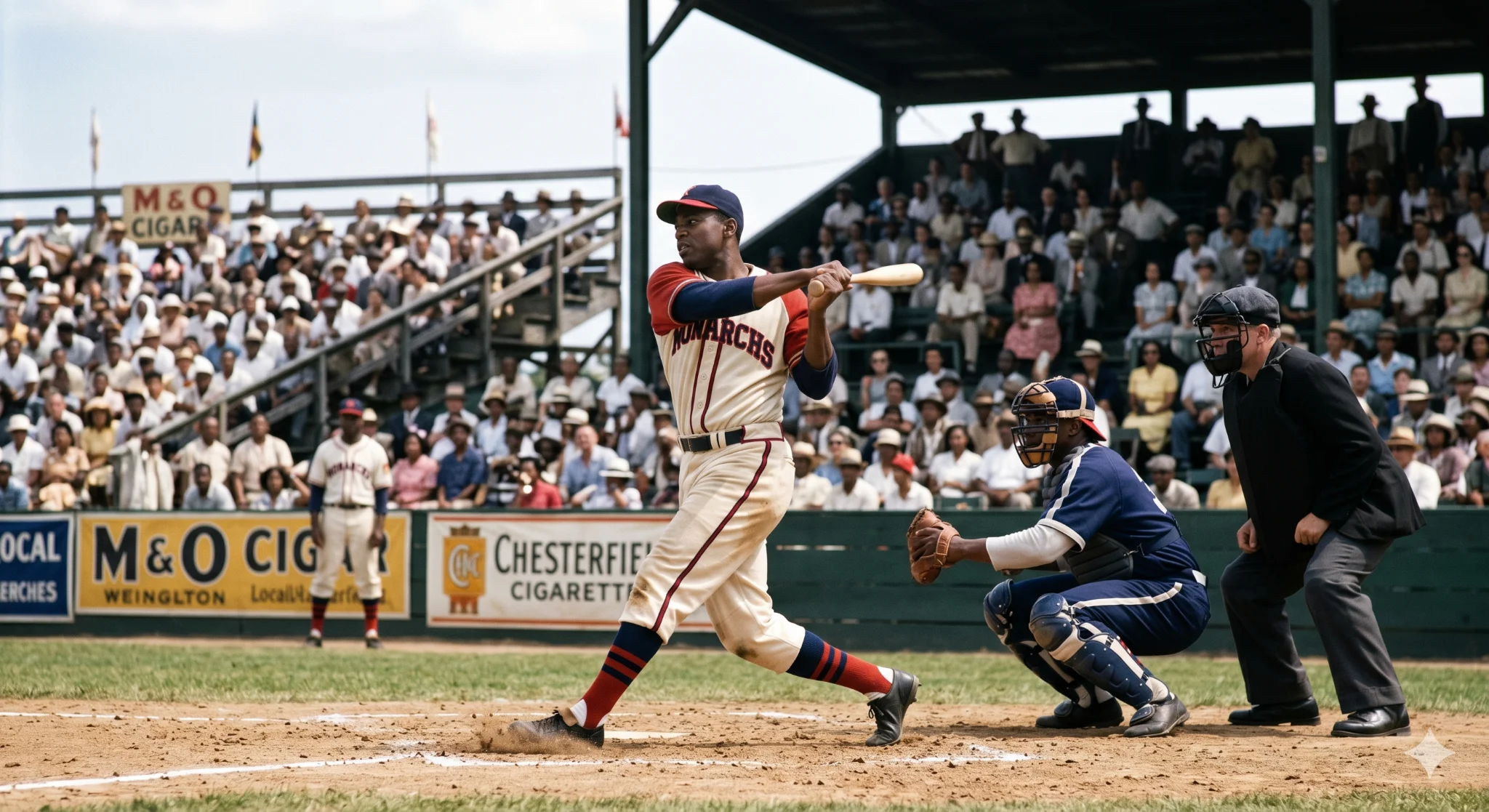
The Negro Leagues: The Greatest Baseball Never Seen by White America
For 40 years, MLB excluded Black players entirely. Josh Gibson may have been the greatest hitter who ever lived. Satchel Paige was the most dominant pitcher of his era. None of them could play in the major leagues because of their race. In 2020 — 73 years after Jackie Robinson — MLB finally recognized the Negro Leagues as major leagues. Gibson's .466 batting average in 1943 is now the official MLB single-season record.
The Black Press: Ida B. Wells, the Chicago Defender, and the Counter-Record
When the white press ignored or celebrated lynching, the Black press documented it. When the Great Migration needed organizing, the Chicago Defender ran train schedules out of Southern cities. Ida B. Wells was run out of Memphis at gunpoint for her journalism. The Black press created the archive that survived when no one else was keeping it — and built the information network that made civil rights organizing possible.
HBCUs: Founded Under Exclusion, $12 Billion Underfunded Today
HBCUs were founded because every white institution refused Black students. They produced the lawyers who argued Brown v. Board, the scientists who calculated orbital mechanics for NASA's early space program, and three-quarters of all Black doctors and dentists for a century. Their reward: documented underfunding of $12 billion below comparable white land-grant institutions since 1987.
Know a chain we haven't traced?
Chain is built in public. If there's a causal connection between a historical act and a present-day condition that we haven't covered, we want to know. Researchers, educators, and community members can submit thread proposals.